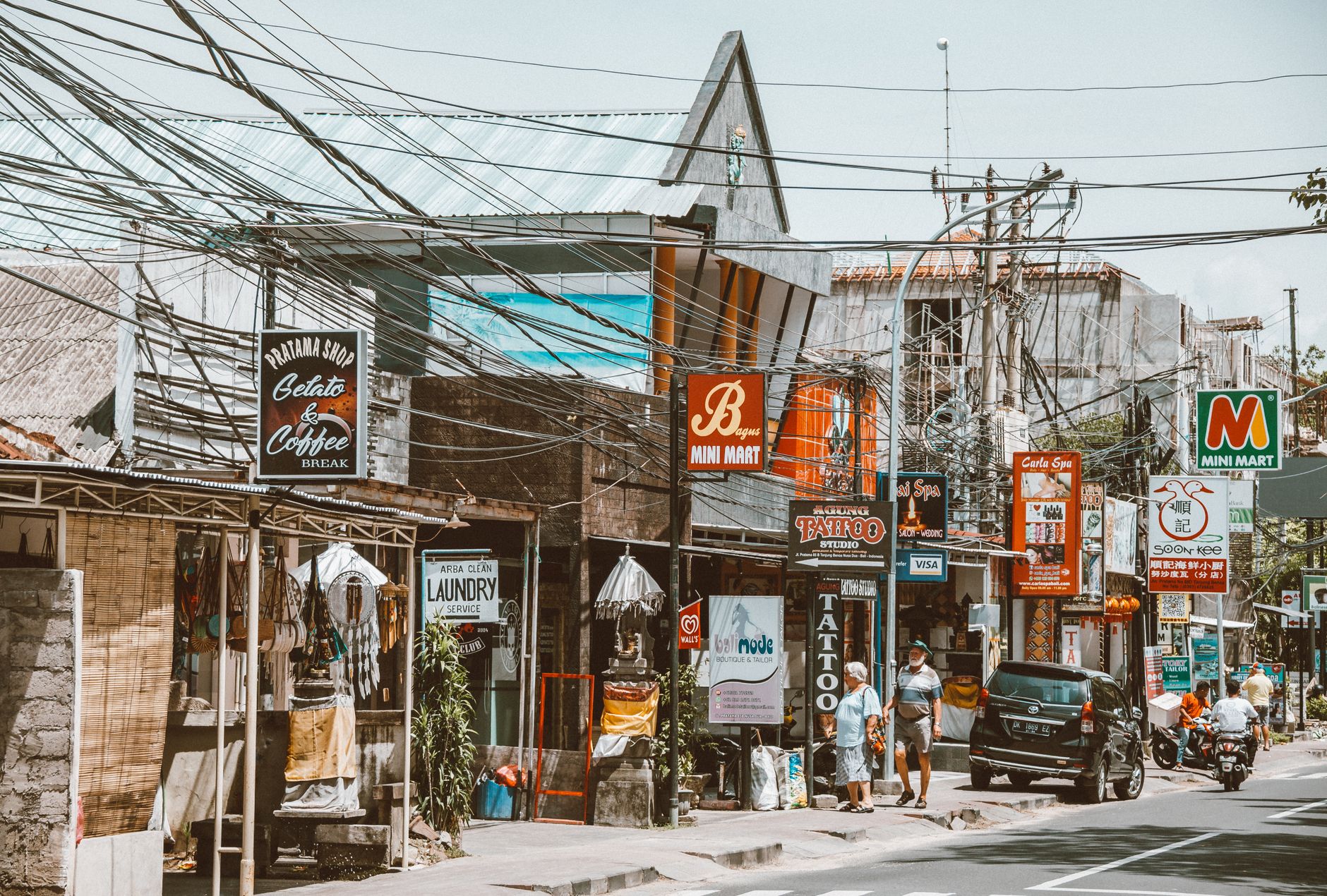
The Part of Canggu the Travel Guides Skip
Most Canggu coverage focuses on surf and coffee. The shopping scene — which is genuinely interesting for long-term residents and people who care about what they buy — gets less attention, partly because it's scattered and partly because the best of it isn't designed to be obvious.
This guide is for residents who want to know what's actually good, not tourists looking for souvenir markets.
Fashion and Lifestyle
Deus Ex Machina (Jalan Canggu)
The temple of enthusiasm. The Canggu outpost of the Australian brand that merged motorcycle culture, surf, and fashion into a coherent lifestyle proposition. The café and event space are the social infrastructure; the retail carries both Deus's own range and a curated selection of independent brands. For casual menswear, the selection is better than most international equivalents at the same price point.
Maap House
The Canggu presence of a brand that took streetwear-meets-surf seriously before it was a widespread category. Limited drops, quality construction, the kind of piece you buy once and wear until it becomes essential. Worth following for new arrivals rather than walking in expecting stock.
White Peacock
Women's fashion with an Indonesian resort-meets-editorial direction. The kind of brand that has a Canggu-specific customer — people who've moved beyond fast fashion and want something wearable but not generic. The quality-to-price ratio is better than it looks from the street.
Local independent boutiques around Batu Bolong
The Batu Bolong corridor has enough independent fashion retail to reward actual exploration. The pattern: boutiques opened by expats or by Indonesian designers who spotted the market, with mix-and-match inventories that include local production and international sourcing. Inconsistent by definition — some are excellent, some aren't — but the density means useful finds for people who enjoy the process.
Home and Living
Bambu Indah (Ubud, but worth the trip)
Worth including because Canggu residents make the drive. The Bambu Indah property sells the design and homeware objects that have defined a strand of Bali's interior design sensibility — organic materials, craft production, a deliberate rejection of mass aesthetics. For significant home purchases, there's nowhere better.
Canggu local furniture and homeware
The workshops and small showrooms along Jalan Raya Canggu and the Kerobokan border carry a constant stream of handmade furniture, textile, and homeware that's been produced for a combination of local market and export. Prices reflect the local retail reality rather than the export markup; quality varies by maker. For furnishing a villa, this is the productive territory.
Kebun (the organic market)
Not shopping in the retail sense, but the organic and natural goods available at the rotating Canggu market produce section are a category of their own. Local producers, small-batch processing, the kind of pantry sourcing that makes cooking in Bali significantly more interesting.
Books, Records, and Specialty
Canggu record stores
A small but genuine record store presence has developed in the Canggu area serving a community that genuinely listens to music. For vinyl, the Berawa-area options are worth knowing if records matter to you.
Periplus (Airport and major malls)
For books, the branch options at the airport and in Seminyak are the most accessible for English-language new releases and travel guides. The selection is limited by distribution but adequate for fiction, non-fiction, and reference.
Groceries Worth Seeking Out
Bintang Supermarket (multiple locations)
The Canggu Bintang is the resident standard. A functional international supermarket with decent imported goods, cheese, wine, dairy, and a produce section adequate for most cooking needs. It's not a premium supermarket but it's practical and within everyone's regular circuit.
Pepito (multiple locations)
Slightly smaller, sometimes better for specific imported items. The selection varies by location; worth knowing both in your neighborhood.
Local markets for produce
Pasar Kerobokan for fresh produce, fish, and meat at local pricing. Getting into the habit of morning market shopping produces both better ingredients and lower cost than supermarket produce alone.
The Sustainable and Zero-Waste Category
Canggu has developed a genuine zero-waste retail ecosystem — refill stations for cleaning products, package-free grocery stores, locally produced alternatives to imported packaged goods.
Bali Buda — health food store and café with organic and natural product focus. One of Canggu's most useful destinations for residents prioritizing sourcing quality.
Refill stations scattered across the neighborhood — look for them in the natural food stores and some pharmacy alternatives.
What's Not Worth the Trip to Canggu
The market and tourist souvenir infrastructure in Canggu is less developed than Seminyak or Kuta for a reason — the neighborhood's retail identity has been built around a different customer. For batik, mass-market silver jewelry, or tourist-oriented craft goods, Seminyak's Oberoi corridor or the Kuta markets serve that need without being Canggu's specialty.
FAQ
Where do Canggu residents actually buy everyday clothing?
Mix of international online (shipping to Bali works fine with a good logistics provider), the local independent boutiques, and the occasional find from the thrift/secondhand market that circulates through community groups.
Is there a secondhand market?
Yes — the expat community has an active secondhand circulation via Facebook groups (Bali Expats Buy/Sell/Trade and similar) that covers everything from furniture to clothes to electronics. More practical than retail for many category needs.
Is there anywhere good for electronics?
Denpasar's Tiara Dewata mall and the electronics cluster around the central business area for local brand availability. For imported electronics, either bring from home, buy online with forwarding, or purchase in Singapore. Bali's imported electronics retail is limited and prices are higher than regional alternatives.