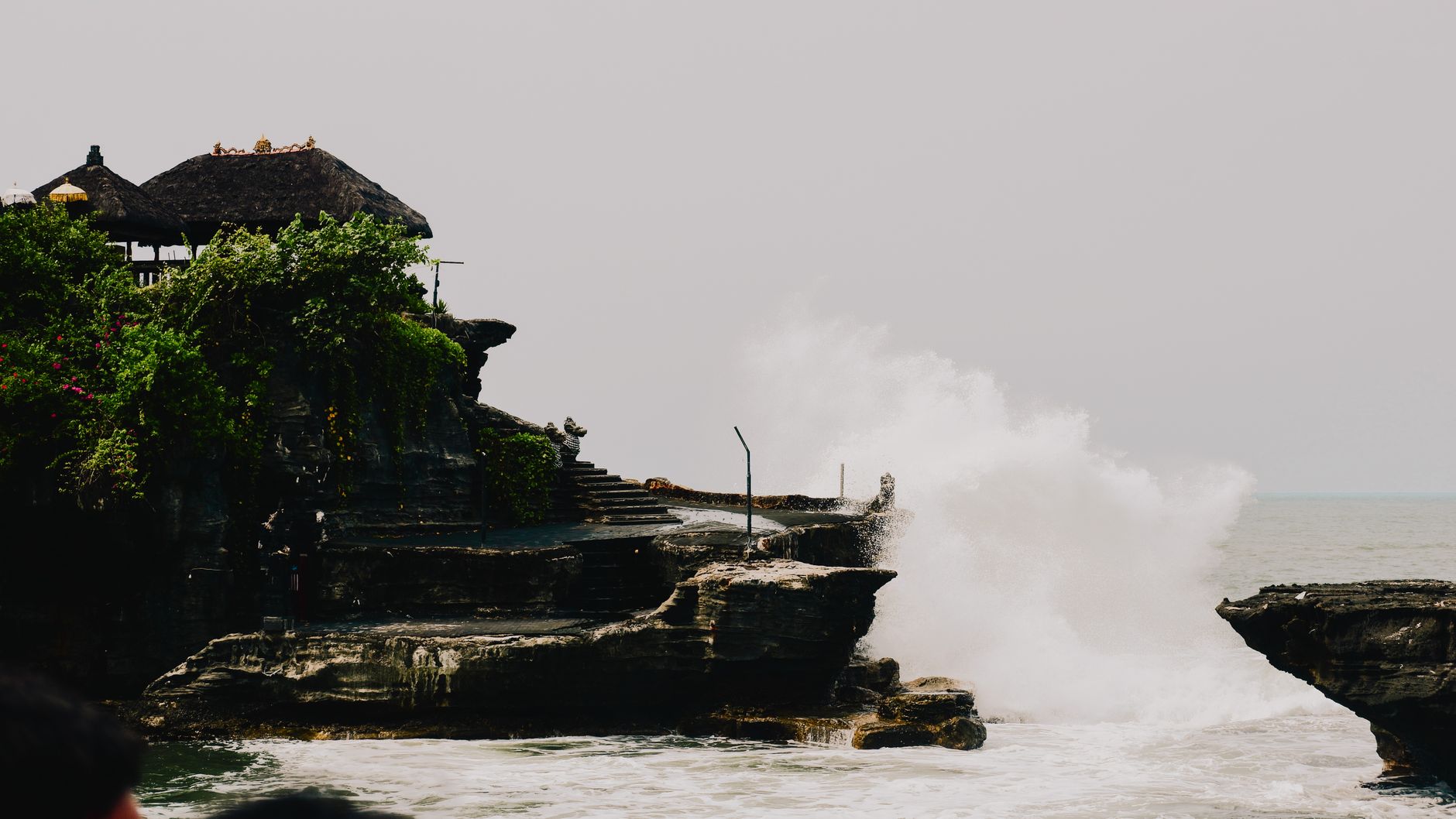
The Bali That Didn't Get the Marketing
Tabanan doesn't appear in most Bali itineraries. The beaches of Seminyak, the cafés of Canggu, the temples of Ubud — these have been written about enough that a version of Bali has crystallized around them. Tabanan is what's left when that version runs out.
This is a recommendation, not a consolation.
The regency stretches west from the central highlands, covering a territory of rice terraces, black sand coastline, and highland villages that most visitors drive through on the way to something else. Long-term residents who find it — and they do find it, usually after time elsewhere on the island — tend to stay.
What Tabanan Actually Is
The regency covers significant territory, from the coast up through the slopes of Batukaru — one of Bali's sacred mountains — to agricultural highlands above 1,000 meters. The coast is different from South Bali's: mostly black sand, less developed, accessed by roads that haven't been engineered for tourist volume.
The areas of most interest for expat residents:
Tabanan Town and surroundings — the commercial center, with markets, services, government offices, and the everyday infrastructure of a working Balinese city. Not particularly scenic but highly functional. Rent here is genuinely affordable: comfortable two-bedroom homes for $400–$600/month.
Selemadeg area (coastal) — the coastal strip west of town, where rice fields meet black sand beaches. Development is beginning here — a few villas, some new construction — but remains years behind South Bali's pace. If the Canggu story interests you more than the current Canggu reality, this is the analogous position.
Jatiluwih area (highlands) — the UNESCO-listed rice terrace landscape. Properties here are fewer and more remote. For those whose primary need is natural environment and genuine quiet, and for whom the drive to services isn't a hardship, this is exceptional.
The Practical Case
Cost of living: Tabanan runs 30–50% below South Bali across most categories. Groceries from local markets, rent, everyday services — all meaningfully lower. This matters for people calibrating a long-term Bali life against a budget, and it matters for investors considering yield relative to acquisition cost.
Traffic: South Bali's congestion is the chief complaint of almost every long-term resident. In Tabanan, roads move. The commute to Denpasar takes 45–60 minutes; the commute within Tabanan town takes minutes.
Services: Tabanan Town has supermarkets (with a Tiara Dewata carrying reasonable imported goods), clinics, and basic retail. For serious medical care, Denpasar hospitals are the realistic option — under an hour away. International clinics (BIMC) are in the 45–60 minute range.
International schooling: Tabanan's schools are Indonesian. Families with children requiring international schooling will need to factor in the daily commute to Denpasar or South Bali options, or the boarding option of Green School (which doesn't require daily commute).
Internet: Available and adequate in town. In more rural parts of the regency, connection quality depends on infrastructure that can be inconsistent. Test before committing.
The Cultural Dimension
Tabanan is one of Bali's historically significant regencies — one of the eight traditional kingdoms, with temples and royal lineage that still shape community life. The Puri Agung Tabanan (royal palace) and its associated cultural traditions remain active.
For residents interested in genuine Balinese cultural experience rather than a curated version of it, Tabanan delivers. Ceremonies here feel different from Ubud — less observed, more participated in, organized around communities that aren't partly composed of tourists.
The local market, Pasar Tabanan, is one of the island's more authentic. Agricultural produce from the highlands, fish from the coast, local crafts without the tourist markup. Shopping here is a practical activity, not an experience designed for photography.
Investment Perspective
Tabanan represents one of Bali's more interesting upcoming investment positions — with the significant caveat that "upcoming" means a longer time horizon than South Bali.
Land prices remain well below South Bali equivalents. The coastal strip between Tabanan and Lalang Linggah is where investor attention is beginning to focus — the scenery is comparable to parts of Canggu five years ago, and the distance from the airport (50–60 minutes) is within range for destination travelers.
Villa development for short-term rental is beginning. Yields in the 8–12% range are achievable for well-positioned properties, though the booking volumes are lower and the guest profile requires different management than South Bali villa operations.
For long-term rental, the value is already there. A well-appointed villa renting at $700–$1,000/month in Tabanan would cost $1,500+ in South Bali.
Who Tabanan Is For
Be honest with yourself about this:
Tabanan works for people who cook at home, drive or ride confidently, value natural environment over social scene, have remote income (or Indonesian-based income), and don't need daily access to high-density international services.
Tabanan is a significant adjustment for people who rely on the South Bali social infrastructure — the density of like-minded expats, the specific cafés and coworking spaces, the particular community that Canggu and Seminyak provide. That infrastructure doesn't exist in Tabanan, and it won't for some time.
Neither is a judgment on the other. Know which you need.
FAQ
How far is Tabanan from the airport?
Approximately 40–55 minutes in typical traffic — better than many South Bali drives during peak hours. For a once-a-week or monthly trip, the distance is very manageable.
Is Tabanan suitable for a family?
Yes, with the schooling caveat noted above. The space, quiet, and natural environment are genuinely excellent for children. Families who choose to homeschool or use Indonesian language schooling find Tabanan ideal. Those requiring international curriculum will need to plan the school commute.
Is the coast in Tabanan good for surfing?
Medewi, one of Bali's best-known longboard breaks, is in Tabanan. Lalang Linggah and surrounding areas have further surf spots. The coastline is less developed than South Bali's, which for surfers often means better.