Bali doesn't have a subway. There's no tram network, no commuter rail connecting Canggu to Seminyak or Ubud to the coast. What the island has instead is a mix of options — and the residents who thrive here are the ones who learn how to use them together.
If you're planning a long-term stay, understanding transportation in Bali isn't just practical. It shapes where you'll live, how much you'll spend, and how much of the island you'll actually get to enjoy.
Why Transportation Planning Matters for Long-Term Living in Bali
Bali's geography is deceptively compact on a map. In practice, traffic in areas like Canggu, Seminyak, and central Ubud can turn a 3km journey into a 45-minute exercise in patience — especially during peak hours or rainy season.
Unlike cities with developed public transport, Bali puts the responsibility of getting around largely on the individual. That means your transportation setup directly affects your daily routine, your stress levels, and your monthly budget.
It also means that where you live in Bali matters enormously. Living within walking distance of the places you visit most — your gym, your workspace, the beach, your favourite warung — can save you hours each week and thousands of rupiah each month.
1. Motorbikes: The Default Choice for Long-Term Residents
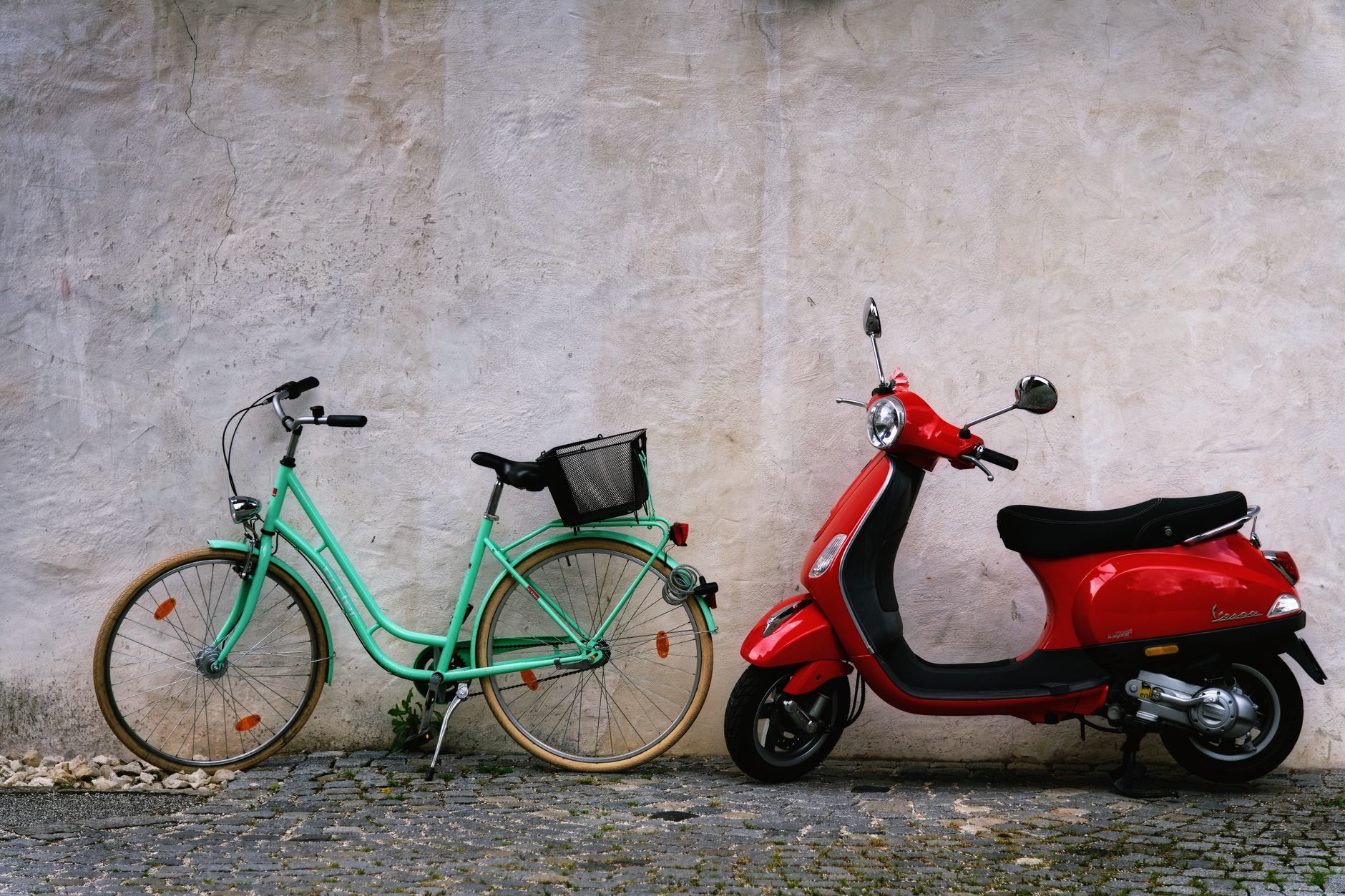
For the majority of people living in Bali long-term, a motorbike is the foundation of daily life. It's affordable, agile in traffic, easy to park almost anywhere, and gives you the kind of freedom that nothing else in Bali quite matches.
Motorbikes cut through the congestion that slows cars to a crawl in Canggu and Seminyak, making them the fastest option for most short and medium-distance trips.
Rental and Purchase Costs
Monthly rentals typically run between IDR 800,000 and IDR 2,500,000 depending on the model and condition. For stays longer than six months, buying often makes more financial sense. Second-hand motorbikes are widely available at IDR 8 to 20 million. New models start around IDR 15 million.
What You Need Before You Ride
- A valid motorcycle license from your home country
- An International Driving Permit (IDP)
- A helmet, every single time
- Confidence riding in real traffic conditions
Local authorities have become increasingly strict about checking documentation. Sort the paperwork before you ride.
2. Grab and Gojek: Flexible Transport Without the Commitment
Grab and Gojek are the two dominant ride-hailing apps across Bali. Both work similarly to Uber — you book through your phone, choose between a motorbike or car, and pay digitally or in cash.
For short trips, GrabBike and GoRide are the go-to options. For comfort, luggage, or longer distances, GrabCar and GoCar are worth the extra cost.
Typical Costs
Motorbike rides generally cost IDR 15,000 to IDR 50,000 for most in-town distances. Car rides range from IDR 40,000 to IDR 150,000 or more depending on distance and demand.
Prices surge during peak hours and heavy rain. Most long-term residents use Grab and Gojek as a supplement — not a substitute — for their primary transport.
3. Private Drivers: The Right Choice for Day Trips and Family Travel
Hiring a private driver is standard practice in Bali for longer journeys, group travel, and full-day excursions. Daily rates generally fall between IDR 600,000 and IDR 1,200,000 depending on the destination, vehicle, and duration.
Beyond the convenience, a good driver knows which routes avoid the worst traffic, which detours save time, and which roadside stops are worth making.
4. Public Transportation in Bali
Public transport exists in Bali, though it remains limited in coverage.
Trans Metro Dewata connects several key areas across the island with affordable fares. Kura-Kura Bus runs air-conditioned services between popular destinations in southern Bali, originally designed for tourists.
For most long-term residents, public transport plays a secondary or occasional role — routes are limited, schedules can be infrequent, and the flexibility most residents need isn't something Bali's public network currently offers.
The Best Transportation Options by Neighbourhood
Living in Canggu
Canggu is one of Bali's most traffic-congested areas. A motorbike is far and away the best tool for daily life here. GrabBike and Gojek work well as backup. Cars are rarely the fastest option.
Living in Seminyak
Seminyak is more walkable than most parts of Bali. Restaurants, cafes, grocery stores, and services are clustered closely enough that short trips on foot are genuinely practical. A motorbike or ride-hailing app covers everything else.
Living in Ubud
Ubud's destinations are spread across hills and valleys. Cars — whether ride-hailing or private driver — tend to be the more comfortable default here, especially in wet conditions on steeper roads.
Living in Sanur
Sanur offers one of the better balances between walkability and accessibility in Bali. The area east of the bypass is compact enough for cycling and walking. A motorbike or car covers the rest of the island when needed.
How Most Long-Term Residents Structure Their Transport
The residents who feel most settled in Bali rarely rely on a single option. A practical setup that works for most lifestyles:
- A motorbike for daily errands, commuting, and short trips
- Grab or Gojek as backup, particularly in poor weather or at night
- A trusted private driver for longer journeys, day trips, and airport runs
This combination gives you flexibility without overspending — and adapts to the way Bali actually works.
Location Is the Foundation
No amount of transport planning fully compensates for living somewhere that adds unnecessary distance to your daily life. The areas of Bali that work best for long-term residents are those that put daily essentials within reach without a long ride.
When we help clients find property in Bali, connectivity is always part of the conversation. Whether you're looking at a villa to live in, an investment property, or somewhere between the two, the surrounding infrastructure shapes daily life more than most people anticipate before arriving.
Frequently Asked Questions
What is the most affordable way to get around Bali long-term?
Renting or buying a motorbike is the most cost-effective option for most residents. Even accounting for fuel and occasional maintenance, it costs significantly less per month than relying on Grab and Gojek for daily use.
Can foreigners legally ride a motorbike in Bali?
Yes, provided you have a valid motorcycle license from your home country and an International Driving Permit, or a local Indonesian driving license. Enforcement has increased in recent years.
Is it better to rent a motorbike or use ride-hailing apps in Bali?
If you're comfortable riding and plan to travel daily, a motorbike rental is almost always more economical. Ride-hailing apps are better for occasional trips, rainy days, or when you'd prefer not to ride.
Which area of Bali is easiest to navigate without a vehicle?
Seminyak and central Kuta are the most walkable areas. Sanur also works well for residents who prefer a slower pace, with cycling a genuinely viable option in parts of the area.