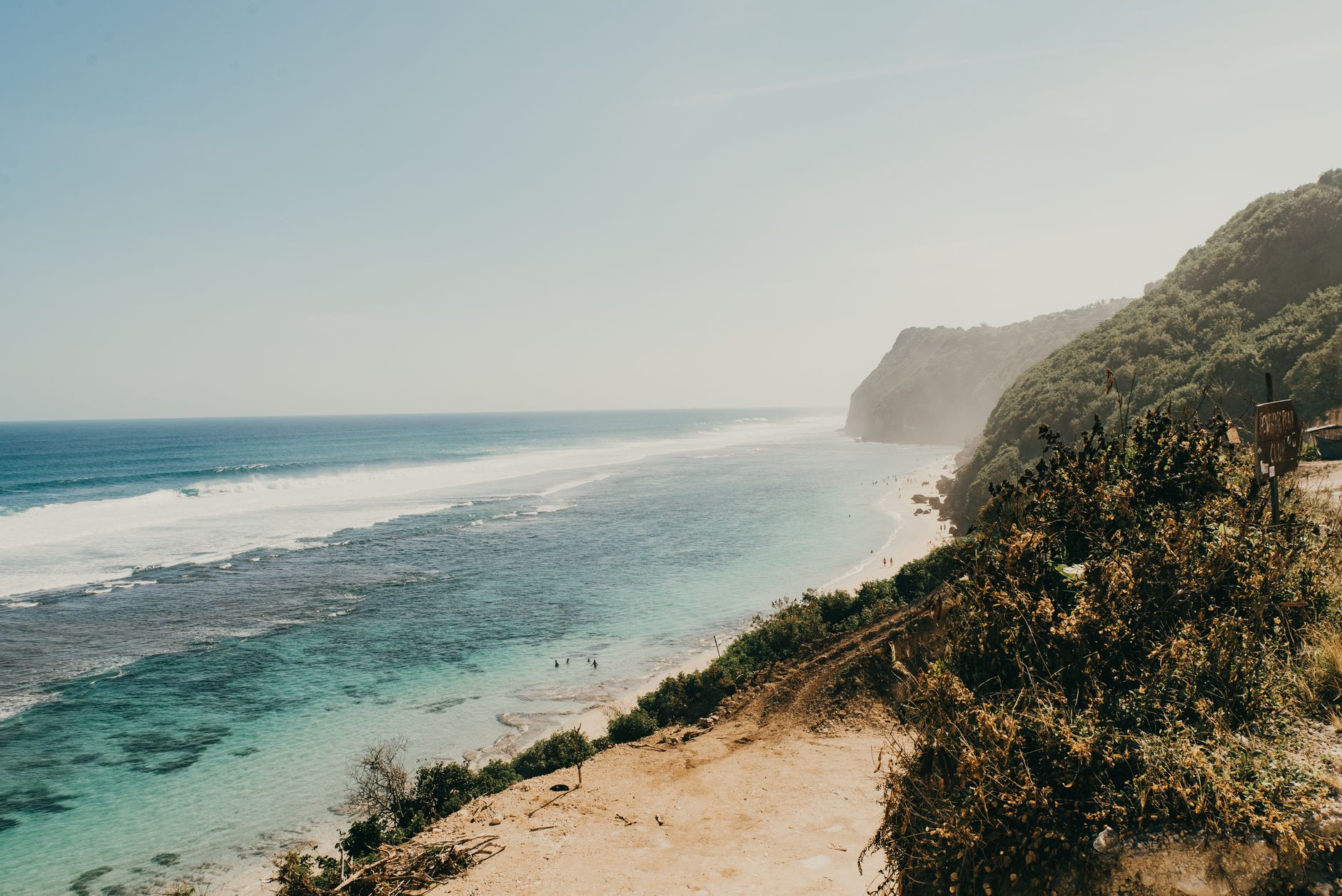
The Same Coastline, Different Conversations
The road north out of central Canggu runs past Berawa, crosses a small bridge, and enters Pererenan. The geography is continuous. The character is not.
Both neighborhoods sit on the same west Bali coast, draw from the same natural assets — rice fields, black sand beach, surf — and serve broadly overlapping communities. But the decisions that get made about where to open a café, what kind of villa to build, and who to market to have, over several years, produced two meaningfully different places.
If you're choosing between them, you're not choosing between good and bad. You're choosing between two versions of a similar desire.
What Canggu Has Become
Central Canggu — Batu Bolong, Berawa, the Echo Beach corridor — is one of Southeast Asia's most successful lifestyle-economy neighborhoods. The café density is extraordinary. Coworking spaces are everywhere. The international community is large, visible, and self-reinforcing.
For people who want to arrive somewhere and immediately connect with a large community of like-minded people, Canggu is unusually good at this.
The costs of that success are real. Traffic in central Canggu during peak hours (9–10am, 5–7pm) is genuinely bad — not frustrating, bad. Rent has increased significantly. The neighborhood that attracted the first wave of arrivals with its low prices and quiet streets is no longer that neighborhood. This isn't a complaint, it's a description.
Best suited for: recent arrivals who want immediate social immersion, people who rely heavily on the neighborhood's service density, short-term stays where social proximity matters more than daily-life quality, investors targeting high-volume short-term rental.
What Pererenan Has Stayed
Ten minutes north, Pererenan developed in Canggu's shadow and didn't quite follow the same trajectory. The rice fields are more present. The streets move better. The restaurant density is lower — 20% of central Canggu, perhaps, with a higher average quality-to-quantity ratio.
The residents skew toward people who made a considered choice. Longer-term Bali residents, families, creative professionals who want the lifestyle but have calibrated what they actually need from it. The neighborhood has good food, good surf access, and enough social infrastructure to build community without being immersed in one whether you want to be or not.
Best suited for: established expats who've been in Bali or know what they want from it, families prioritizing space and quiet, remote workers whose social life is built intentionally rather than by proximity, investors targeting quality-seeking mid-term renters.
The Numbers
Rent (two-bedroom villa with pool)
Canggu (Batu Bolong/Berawa): $1,300–$2,000/month
Pererenan: $950–$1,400/month
Rent (three-bedroom compound)
Canggu: $1,800–$2,800/month
Pererenan: $1,200–$1,900/month
Daily life costs: broadly similar, with Canggu's restaurants averaging 15–20% higher at the higher end of the market.
Short-term rental yields: Canggu runs higher on raw booking volume; Pererenan properties positioned correctly achieve comparable yields with longer average stays and lower turnover cost.
The Traffic Question
Traffic in Bali is the quality-of-life issue that most people underestimate when they arrive and most people cite when asked what they'd change about South Bali.
Central Canggu's traffic is now a factor in daily decisions in a way it wasn't five years ago. Leaving at 8:30am for Denpasar? Plan for congestion. Coming back at 6pm? Same.
Pererenan's traffic is meaningfully better — not South Bali standard, but the peak hour experience is noticeably more manageable. For residents who move in and out regularly, this makes a real difference.
The Social Life Difference
This deserves honest treatment because it matters differently for different people.
In central Canggu, social life is ambient — you will encounter community by existing in the neighborhood. The cafés, the gyms, the coworking spaces, the beach — all are populated densely enough that social connection happens without much effort. For people in a transition phase, arriving somewhere new, building a life: this is genuinely valuable.
In Pererenan, social life is constructed rather than ambient. The community is there — real, friendly, connected — but it requires slightly more intention. You find your people at specific spots rather than wherever you are.
Neither is better. They're different experiences of community.
Making the Choice
Go to Canggu if:
- Social density and ease of connection are important right now
- You rely on the neighborhood's services daily (the specific cafés, the coworking options)
- You're planning a shorter stay and want to maximize it
- You're investing in a property targeting the highest-volume Airbnb market
Go to Pererenan if:
- You know what you want from Bali life and want it with less noise
- Space, garden, and rice field access matter more than restaurant variety
- The surf and beach are a daily part of your life
- You're building something slower and more settled
FAQ
Can I easily visit Canggu from Pererenan?
Yes — 10–15 minutes by scooter, 15–20 by car. Pererenan residents who want Canggu's social infrastructure access it regularly; they just don't live inside it.
Which has better surf?
Old Man's in Pererenan is a more forgiving, less crowded break than Batu Bolong. For beginners and intermediates, Pererenan is arguably better. For experienced surfers who want variety, the whole corridor is accessible from either base.
Is the price difference significant enough to change the decision?
At $300–$500/month rent difference for comparable properties, the financial argument for Pererenan is real but probably not decisive on its own. Make the choice on lifestyle fit; the savings are a bonus.