How Pererenan Happened
There's no single moment when Pererenan became its own thing. The neighborhood exists because Canggu's core — Batu Bolong, Berawa, Echo Beach — filled up, and the overflow moved north along the coast. What happened next was slightly unusual: the people who moved to Pererenan tended to be people who wanted something slightly different from what they'd been in, and Pererenan became that thing.
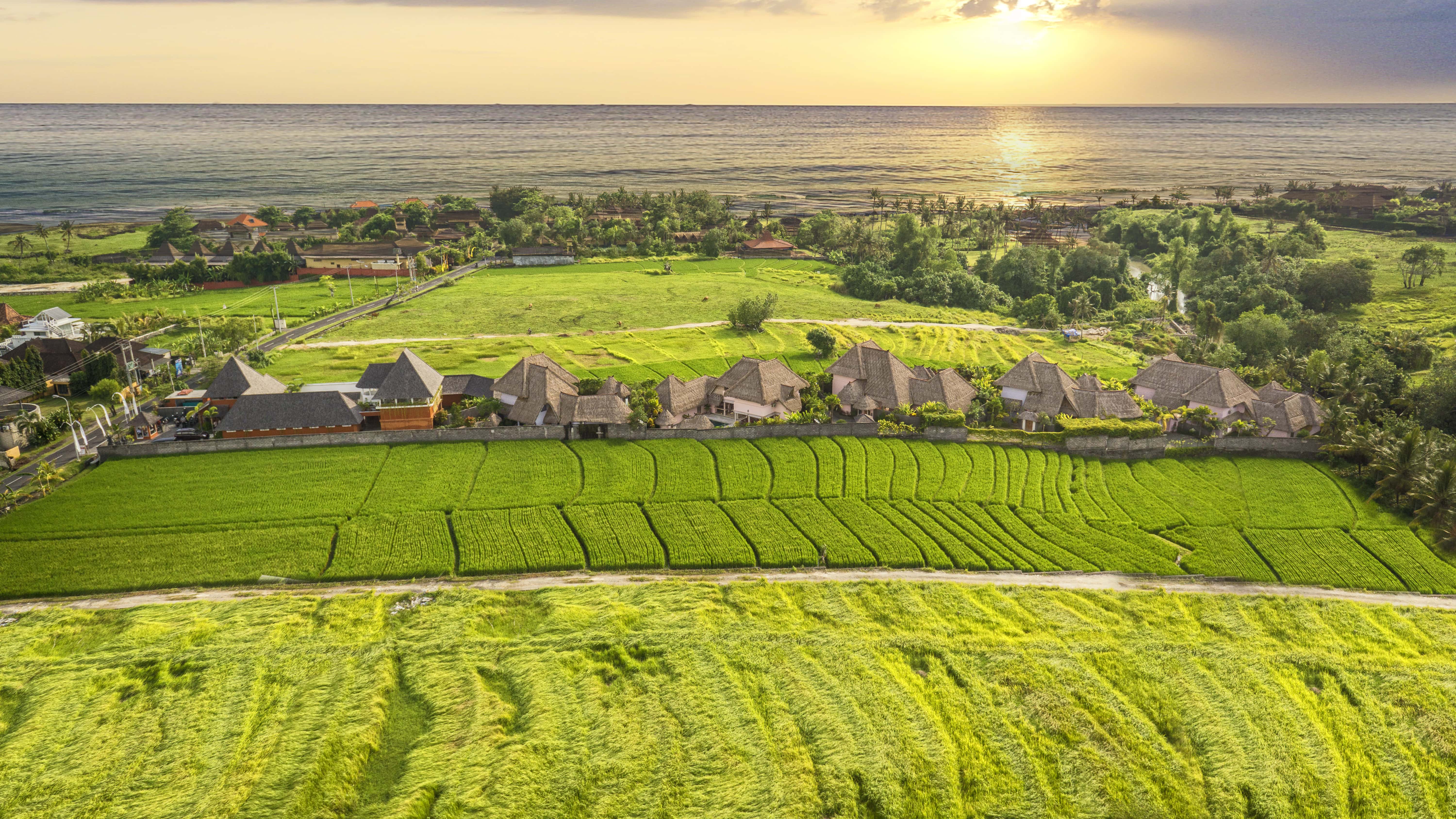
The rice field views are there. The black sand beach is there. The surf break (Old Man's, which despite the name draws mixed generations) is there. What's also there is more space between buildings, a higher ratio of actual residents to tourists, and streets that move more freely than the tangle further south.
Understanding Pererenan means understanding it as Canggu-adjacent rather than Canggu-proper — which is precisely why many people prefer it.
The Physical Layout
Pererenan sits north of Berawa and south of Tibubeneng, on the western Bali coastline. The area is organized around a few primary roads running roughly parallel to the coast, with lanes branching toward the beach and toward the rice fields to the east.
The beach section feels different from Batu Bolong: less commercial, fewer beach clubs, the actual ocean sounds audible. Old Man's Beach has a warung strip and surf rentals — low-key infrastructure that serves the people using it without becoming the point of the place.
The inland section — toward the rice field corridors and approaching the Canggu border — is where most of the residential stock sits. Villa compounds, garden walls, a mix of long-term expat housing and newer construction. The rice fields here are still working agricultural land.
Who Lives Here
Pererenan's resident population skews toward people who've been in Bali long enough to make a considered choice. The neighborhood selection effect is real: early Canggu, too chaotic and expensive. Ubud, too far from the coast. Kerobokan or Seminyak, too urban. Pererenan offers the coastal lifestyle that drew people to Bali without the version of Canggu that Canggu has become.
The typical resident: a remote professional, a creative worker, a small-business owner with Bali-based income, or a family prioritizing space and surf access. People who cook at home with some regularity. People who know the names of their neighbors.
The café culture exists — Pererenan has good coffee options and is seeing new food and beverage openings — but at a density that feels human rather than overwhelming.
Property and Rent
Pererenan prices less than equivalent Canggu properties and more than neighborhoods further from the coast. The math reflects its position accurately.
A two-bedroom villa with pool: $1,000–$1,500/month. Three-bedroom with good garden space: $1,300–$2,000/month. These are meaningful savings relative to Berawa or Batu Bolong equivalents, for properties that often have more land and larger gardens.
For buyers, Pererenan land pricing still offers a gap relative to the south — closing, but not closed. The investment case is straightforward: the neighborhood has the natural assets and the lifestyle appeal, the development is following demand at a normal pace, and the pricing hasn't yet fully reflected where the neighborhood is heading.
Short-term rental performance: villas well-managed and correctly positioned for the Pererenan guest profile (surfers, lifestyle seekers, families wanting something quieter than South Bali) generate 7–10% gross yields. The booking profile favors weekly and two-week stays over weekend turnover.
Daily Life
Food: Pererenan has developed a genuine food scene — not Canggu's density, but enough variety for daily needs. Honest breakfast spots, good coffee, several decent dinner options. For restaurant diversity or specific cuisine cravings, Canggu is 10 minutes away.
Surf: Old Man's is a forgiving wave that works across skill levels. More importantly, it's rarely the Batu Bolong crowd situation. Early mornings here are worth it.
Markets and groceries: local warungs serve everyday needs. For full grocery runs, the Canggu Canggu Bintang/Pepito cluster or the Kerobokan Tiara Dewata are the practical options — easily incorporated into a scooter ride.
Coworking: limited within Pererenan itself, but Canggu's coworking infrastructure is accessible. Most Pererenan residents who work remotely do so from home or make periodic Canggu trips for the social coworking context.
Services: BIMC Kuta (international clinic) is 20–30 minutes. The airport is 35–45 minutes.
The Comparison to Central Canggu
People frequently ask: Pererenan or Canggu? The question usually comes from people who want the Canggu lifestyle but have seen the reality of what that means now.
Choose Pererenan if:
- You value the coastal lifestyle over the social scene density
- You want more space for the same or less money
- The rice field walk or morning beach run matters more than walkable restaurant variety
- You're building a quieter, more grounded version of Bali life
Choose central Canggu if:
- The social infrastructure — the density of cafés, coworking, restaurants — is genuinely important to your daily work or social life
- You're in a phase of arrival where meeting people quickly matters
- You travel frequently and want the maximum convenience of central location
Neither is wrong. They're different specifications of the same base desire.
FAQ
Is Pererenan actually a separate village from Canggu?
Administratively, yes — it's a different banjar and desa. Practically, the boundary is navigational rather than experiential. The neighborhoods grade into each other without a clear line.
How's the traffic getting to and from Canggu?
Better than the reverse. Coming from Canggu south into central Bali involves the congestion Canggu is known for. Getting from Pererenan to Canggu takes 10 minutes on most days. It's close enough to access easily, far enough to escape daily.
Is it suitable for families with children?
Yes, particularly well. The space available for the price, the quieter streets, and the beach proximity make Pererenan a common choice for families. International schooling requires planning — the nearest options are in Canggu/Seminyak direction or Kerobokan.