The Infrastructure Behind the Lifestyle
There's a particular version of Bali life that appears on Instagram: the infinity pool, the morning coffee with a rice field view, the effortless days. What that version doesn't show is the conversation with the landlord about why the power tripped at 11pm, or the afternoon spent arranging water delivery when the PDAM ran dry, or the question of what actually happens to your waste once it leaves the property.
None of these things are hardships when you understand them. All of them become frustrating when you don't.
This is the practical guide that the real estate listing doesn't include.
Water in Bali
Water is the infrastructure issue that catches the most new arrivals off guard, because the problems aren't predictable from looking at a property.
The three sources
PDAM (Perusahaan Daerah Air Minum) — municipal piped water. Available in developed areas of South Bali and Denpasar. When it works well, it's convenient; pressure and supply reliability vary by neighborhood and season. PDAM water is not generally safe to drink unfiltered.
Well water — most villas not connected to PDAM use a ground-level pump drawing from a well or borehole. Quality varies significantly by location; some areas have excellent well water, others have high mineral content or seasonal drops in water table. Well water almost universally requires filtration before drinking.
Tanker delivery — when PDAM supply is insufficient or wells run low (particularly in dry season), water is delivered by truck to roof tanks. In many villas this is the primary supply. Pricing is typically 80,000–150,000 IDR per cubic meter delivered.
What to check before signing a lease:
- Which source(s) does the property use?
- Is there a roof storage tank? (Essential for any system that isn't pressure-consistent PDAM)
- Has the well ever run low in dry season? (Ask explicitly; landlords won't volunteer this)
- What happens when PDAM stops? Is tanker delivery arranged by landlord or tenant?
Drinking water: Almost everyone in Bali — locals and expats — uses bottled or filtered water for drinking. Large refillable gallon containers (19L) from Aqua or local brands cost 10,000–20,000 IDR and are delivered to your door. A countertop filter can further reduce cost for households that use significant volume.
Electricity
PLN and the voltage situation
Bali runs on PLN (Perusahaan Listrik Negara) grid power at 220V / 50Hz. This is compatible with most modern appliances sold internationally, but older appliances designed for 110V (common in North America) require transformers. Check your electronics before you arrive.
Prepaid vs. post-paid meters
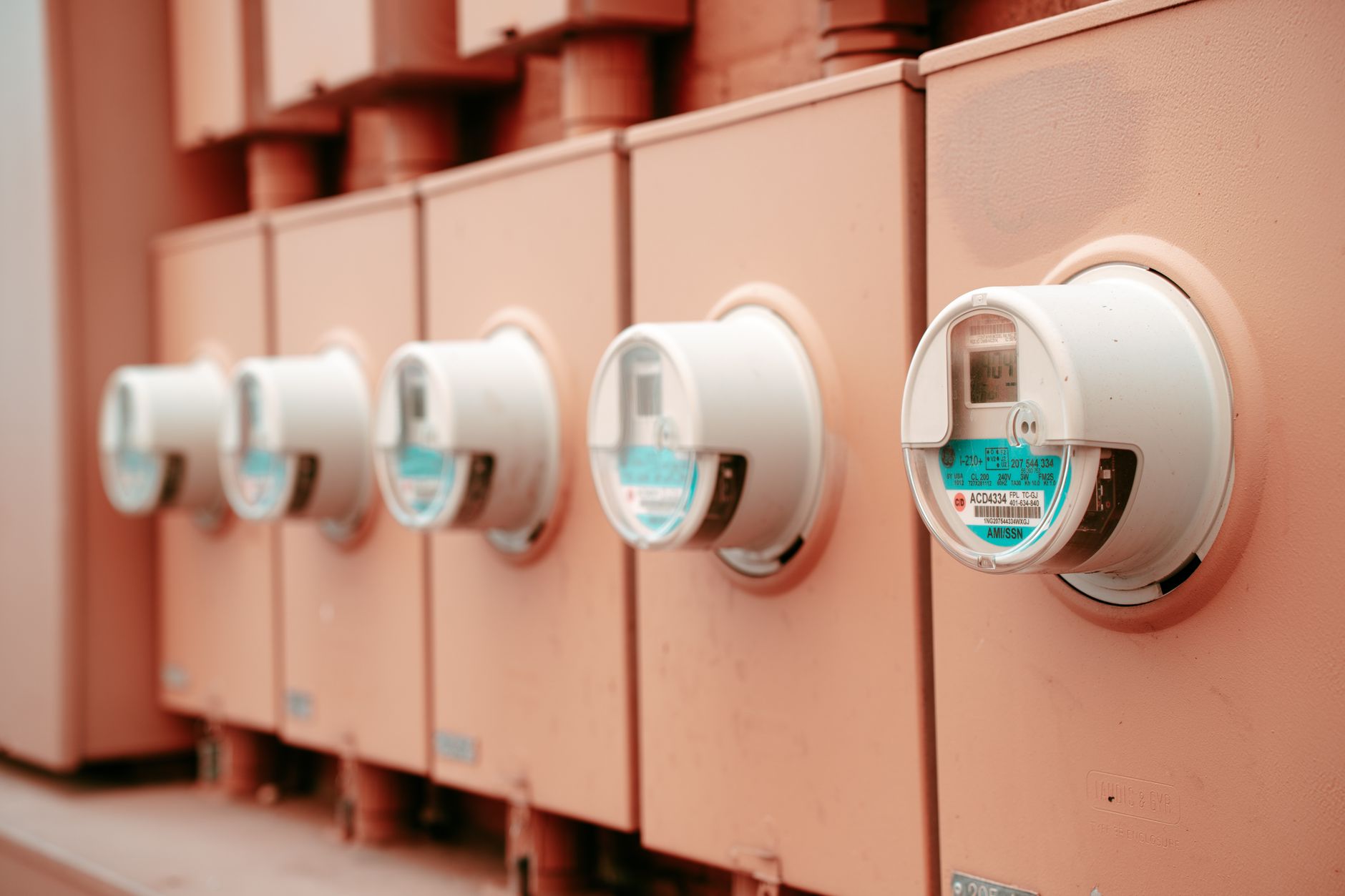
Most residential properties use a prepaid (token) system — you top up a meter via the PLN app, Tokopedia, or convenience stores. When the token runs out, power cuts immediately. Landlords typically explain the system; the key practice is monitoring the remaining balance and topping up well before it empties.
Larger properties and some older buildings use post-paid meters with monthly billing.
Amperage and capacity
Every PLN connection has a rated amperage — typically 2,200W (10A), 3,500W (15A), or 4,400W (20A) for residential properties. If you simultaneously run an air conditioner, water heater, washing machine, and oven in a villa with 2,200W capacity, the breaker trips. This is the physics of the system, not a malfunction.
When looking at a property, ask about the PLN capacity (daya). For villas with multiple AC units, a 4,400W+ connection is advisable.
Power outages: South Bali experiences scheduled and unscheduled outages — typically brief (minutes to an hour) and infrequent in well-serviced areas. During dry season (July–October), longer outages can occur. For work-from-home residents who need consistent power, an uninterruptible power supply (UPS) for computers and a generator or inverter backup is worth considering.
Cost: Electricity rates in Bali run roughly 1,300–1,600 IDR per kWh. Monthly bills for a two-bedroom villa with two AC units running 8–10 hours daily typically range from 600,000–1,200,000 IDR ($40–$80 USD) depending on usage.
Waste Management
This is where Bali's infrastructure most visibly lags behind the lifestyle it promises, and where resident behavior has the most impact.
How it actually works
Most residential areas have informal waste collection — a collector comes door-to-door by motorbike or small truck, typically twice a week, collecting a fee of 50,000–100,000 IDR/month. This waste goes to Suwung landfill in South Bali, which operates under significant pressure.
What happens to waste once it reaches the collection point varies significantly by area. Some neighborhoods have more organized sorting; others operate entirely on informal mixed-waste collection.
Practical steps for residents:
Separation at source: Separate wet waste (food scraps) from dry waste (plastic, paper, cardboard). Even if the collection system doesn't sort, separation makes composting possible and reduces smell in storage.
Composting: For villas with garden space, a simple compost setup handles wet waste effectively and reduces collection volume. The climate makes composting fast — three to four weeks from food scraps to usable compost.
Plastic reduction: Bali's plastic waste problem is well-documented. Refillable water containers, reusable shopping bags, and reduced single-use plastic purchasing make a measurable difference at the household level. Many South Bali markets and grocers now provide alternatives.
Hazardous waste: E-waste, batteries, and chemicals require specific disposal. Look for collection points at supermarkets (some Bintang and Pepito locations accept batteries and e-waste). Do not burn plastic or dispose of hazardous materials in regular waste.
Internet and Connectivity
For the remote worker contingent, connectivity is often the most important utility.
Primary options:
IndiHome/Telkom fiber — the most reliable fixed broadband. Available in most urban and developed areas; speeds of 20–100 Mbps are typical. Installation requires an Indonesian phone number and sometimes landlord assistance. Monthly costs: 300,000–600,000 IDR depending on plan.
Biznet fiber — available in South Bali, often faster and more stable than IndiHome. Higher price point.
Mobile data — Telkomsel's network is the most reliable across Bali. A local SIM with a data package serves as a backup and for areas without fixed line service. For light use, 4G coverage is adequate; for heavy video conferencing from a fixed location, fixed broadband is advisable.
Before signing any lease, test the internet connection during your viewing. Speed tests at different times of day reveal consistency. Ask what provider the property uses and check if the connection is shared.
FAQ
My power keeps tripping — what's wrong?
Almost certainly an amperage issue, not a fault. Check the PLN capacity of the connection and what appliances you're running simultaneously. A 2,200W connection cannot support two AC units plus a water heater. The fix is either behavioral (stagger usage) or an upgrade of the PLN connection, which the landlord must arrange.
Is the tap water safe to drink?
No, for essentially all properties in Bali. Use bottled or filtered water for drinking and tooth-brushing. Showering and cooking with boiled water is generally fine.
What happens when the power goes out for a long time?
Notify your landlord. PLN outages lasting more than a few hours can be reported to PLN directly (helpline 123). In areas with known outage problems, a portable inverter/battery backup for computers and phones is worth having.