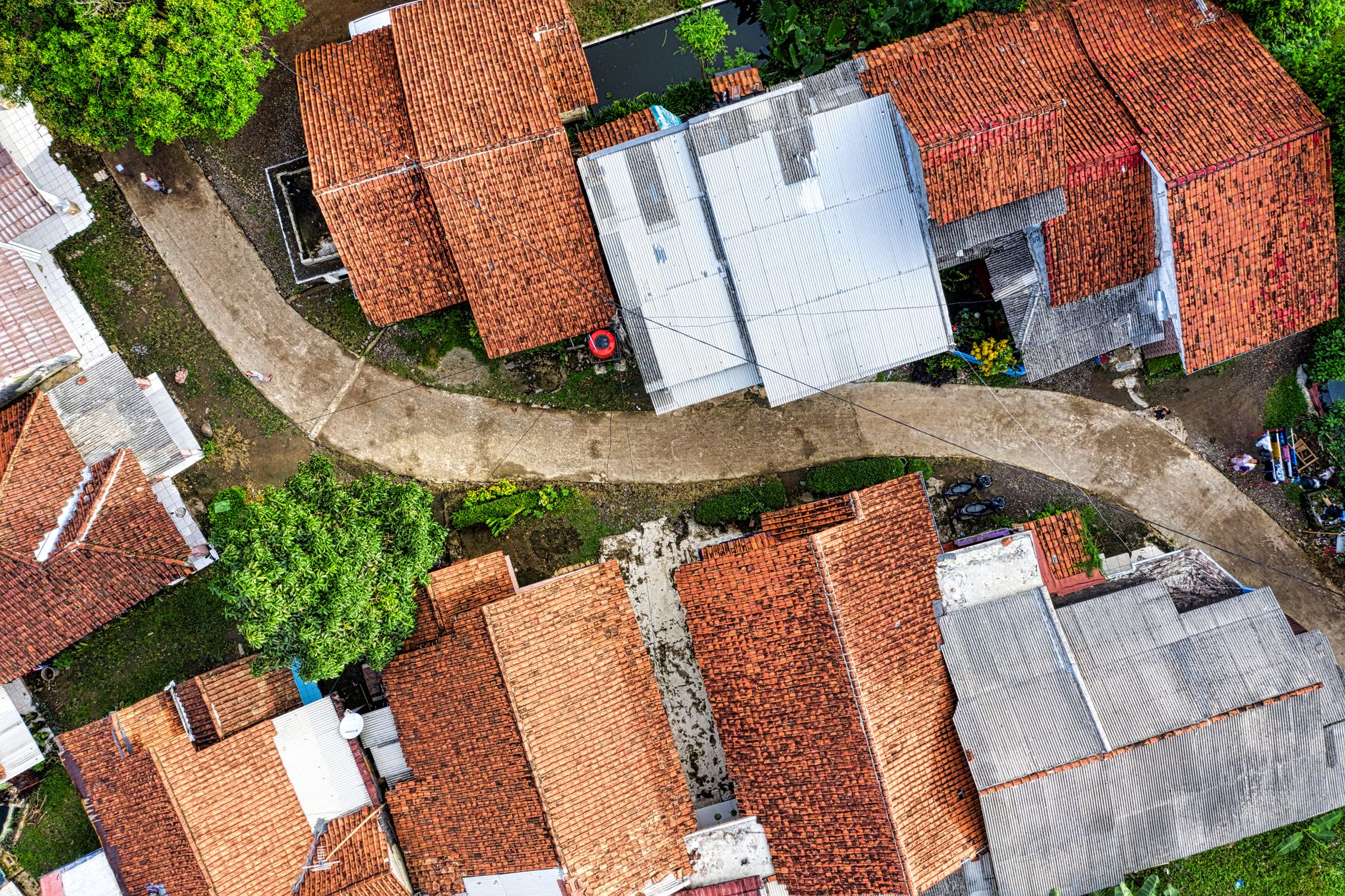
The Neighborhood That Rewards a Second Look
Most people arrive in Bali with a mental map drawn from travel articles: Canggu for surf and cafés, Seminyak for sophistication, Ubud for culture. Kerobokan barely appears on that map. This is the reason it remains one of South Bali's most livable addresses.
Positioned between Seminyak's southern polish and Canggu's northern energy, Kerobokan has developed without the weight of a dominant reputation. The streets are quieter. The villas are larger for the price. The community skews toward people who've been in Bali long enough to know what they actually want — and who've chosen this over the alternative.
This guide is for people considering making it home.
Kerobokan's Internal Geography
The neighborhood isn't uniform. Knowing the distinctions matters before choosing where to rent.
Western Kerobokan — the section that approaches Tibubeneng and the rice field corridors — retains agricultural character. You'll find villa compounds set among working fields, longer distances between services, and genuine quiet. The trade-off for that quiet is regular driving for daily needs.
Central Kerobokan — around Jalan Raya Kerobokan and the traditional market — represents the neighborhood at its most functional. Warungs and local restaurants, design studios, furniture showrooms, and the small businesses that serve a real residential population. This is where daily life actually happens.
Eastern Kerobokan — the section bordering Seminyak — grades into the southern neighborhood so gently that the boundary is mostly administrative. Some of the area's best villas sit here, with quick walking or scooter access to Seminyak's commercial strip.
Housing: What Your Budget Gets You
Kerobokan's pricing reflects its position: meaningfully below Canggu and Seminyak, with larger properties than either.
A two-bedroom villa with pool rents for $900–$1,400/month — $400–$600 less than an equivalent property in central Canggu. Three- and four-bedroom compounds with garden space, which barely exist in Seminyak at any price, are findable here in the $1,400–$2,200/month range.
For buyers, land prices per are still where Canggu was five years ago. The trajectory is clear — properties here are appreciating as the neighborhood's amenity base develops and more buyers recognize the value gap. But the entry point relative to neighboring markets still makes investment sense for those who understand where Kerobokan is heading.
What to look for in a Kerobokan villa:
- Access quality — some properties sit on lanes that narrow to single-track width; verify you can navigate daily without stress
- Ownership documentation — as in all of Bali, independent title verification through a notary is non-negotiable before signing
- Utilities infrastructure — water and electricity supply vary more in Kerobokan than in more developed Canggu addresses; ask specifically
Daily Life in Kerobokan
Pasar Kerobokan is the neighborhood's most authentic daily institution. The traditional wet market runs every morning, peaking between 6 and 9am, with produce, fish, meat, and prepared foods at local prices. It's where residents who actually cook in Bali shop. It's worth knowing even if you don't cook much — the experience of a working Balinese market at dawn is worth the early start.
Getting around: Kerobokan is scooter-and-car territory. Walking for daily needs isn't practical from most addresses. GoJek and Grab cover the area adequately for people who don't ride. A scooter opens the neighborhood completely — the rice field rides in the early morning, before traffic builds, are the neighborhood's quiet pleasure.
Services: International clinics (BIMC Kuta, Siloam) are 15–25 minutes. The airport is 25–35 minutes. Major supermarkets including Pepito and Bintang are close. International schools — Green School and the various Seminyak-area options — are accessible without the commute that Ubud-based families accept.
The Community
Kerobokan's expat community is smaller and less visible than Canggu's, which is often precisely why people choose it.
The typical profile: families with children prioritizing space and quiet over social scene density; creative professionals who work from home; long-term residents who came to Bali years ago, tried other addresses, and ended up here. People who cook at home and know their neighbors. People who go to Canggu or Seminyak to see people, then come back.
This is not the neighborhood for people arriving fresh and wanting immediate immersion in a large social scene. It's the neighborhood for people ready to build something more particular.
Investment Performance
Short-term rental in Kerobokan has improved significantly as the neighborhood's profile has risen. Well-managed villas achieve 7–11% gross yields — competitive with core South Bali markets at lower acquisition cost.
The guest profile shifting toward longer-term renters and people seeking residential experience over tourist proximity has also improved average booking length, which reduces turnover costs and produces steadier income.
FAQ
Is Kerobokan far from the beach?
The nearest beach (Double Six / Seminyak Beach) is 10–15 minutes by scooter. Canggu beaches are 15–20 minutes north. It's not a walking distance beach situation, but the proximity is entirely practical.
What kind of community can I expect?
Smaller and more settled than Canggu. People tend to know each other — the neighborhood is large enough to avoid insularity but small enough that regular faces become familiar. Social life here is built deliberately rather than discovered by proximity.
Is Kerobokan suitable for a family with school-age children?
Yes, and particularly well. The larger properties suit family living, the streets are quieter, and the location gives access to international schooling options in both directions.