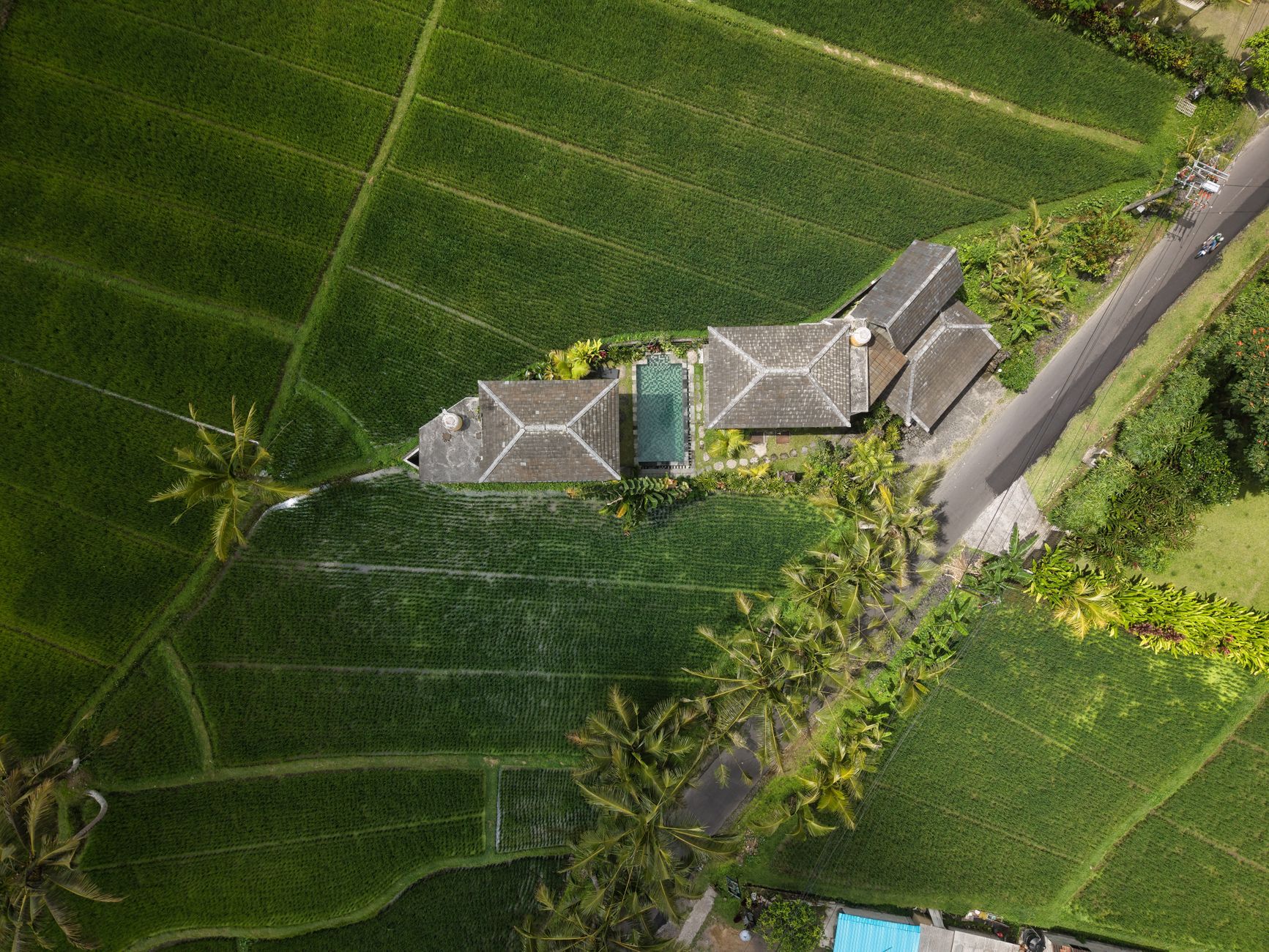
The Case for Building Your Own
Bali's real estate market offers a seductive shortcut: find an existing villa, transfer ownership, collect keys. For many investors, this path feels intuitive. But there's a quieter, often more rewarding alternative—one that separates strategic investors from opportunistic buyers.
Building from the ground up demands patience and active oversight. It also delivers something the resale market rarely offers: control over outcome. When you construct a villa yourself, you're not inheriting another developer's compromises, hidden structural issues, or design limitations. You're not paying a premium for someone else's vision. Instead, you're creating an asset precisely calibrated to your investment thesis and lifestyle needs.
The numbers tell part of the story. A newly completed villa, built to your specifications, typically costs 20–40% less per square meter than purchasing equivalent quality on the secondary market. But the real advantage runs deeper. You begin with a clear permit history, transparent construction documentation, and contemporary systems—not aging plumbing, outdated electrical work, or mystery renovations. For investors planning to rent their property, this translates into fewer maintenance headaches and stronger appeal to discerning travelers.
Yes, the build process is more complex than buying existing. It requires your attention, your judgment, and partnership with professionals who understand both Bali's regulatory environment and quality construction. But for investors with time and the right team, building consistently yields superior returns.
Phase 1: Land Acquisition—Begin at the Foundation
Before you sketch a single floor plan, you must understand what you actually own and what you're permitted to build. This foundational phase separates investors who succeed from those who encounter expensive surprises.
Zoning and Land Classification
Bali's land carries restrictive classifications that directly affect your rights. Agricultural land cannot legally be developed into residential villas—the conversion process is complex, expensive, and often blocked by local regulation. Your land must already fall within tourism, commercial, or residential zoning to proceed.
This matters more than it initially appears. A parcel that looks perfect—good location, reasonable price—may simply be zoned wrong. Verify directly with the Dinas PUPR (Public Works and Spatial Planning Agency) before committing capital. Don't rely on a seller's assurance or a casual conversation with an agent. Request written confirmation of zoning classification for your intended use.
Title and Building Rights
The land certificate is your legal foundation. Hak Milik (freehold) is the strongest title available to foreign investors, and it can support building rights. Other certificate types exist in Bali, but not all carry equal building authority. Your PPAT notary (the licensed professional who handles land transactions) must confirm that your specific title type permits construction for your intended purpose.
This isn't bureaucratic formality—it's protection. A title dispute or a certificate that doesn't support building rights can halt your entire project after significant investment.
Site Conditions and Hidden Realities
Beautiful land in Bali sometimes comes with structural complications you can't see from the surface. Before closing on your purchase:
- Soil assessment: Have a geotechnical engineer evaluate bearing capacity. Bali's volcanic soils can be excellent or problematic depending on depth and composition. Poor soil capacity means expensive foundation work.
- Slope stability: For elevated sites or clifftop properties, assess erosion risk and slope stability. Bali's tropical rains test unstable slopes.
- Flooding patterns: Talk to neighboring property owners and review monsoon-season water flow. Your chosen site may appear dry during the dry season.
- Access and utilities: Confirm that construction vehicles can actually reach the site, and that water and power connections are available—or identify the real cost of bringing them in.
A detailed site assessment—typically IDR 8–15 million with a qualified engineer—often saves multiples of that cost later.
Phase 2: Architectural Vision and Technical Execution
Your architect is not a luxury vendor; they're your primary strategic partner. They will navigate permitting, establish construction drawings, and define quality standards that your contractor must meet.
Choosing Your Architect
Bali attracts international architects of genuine caliber alongside competent local practitioners. The right choice depends on project complexity and your specific needs.
International architects offer design sophistication and often sophisticated MEP (mechanical, electrical, plumbing) systems. They may lack fluency in Bali's permitting landscape, requiring a local partner to navigate approvals.
Established local firms move seamlessly through permits and understand material availability. The best combine that practical knowledge with contemporary design sensibility.
Regardless of choice, visit completed projects and speak directly with past clients. Ask about timeline accuracy, budget discipline, and problem-solving during construction.
Essential Deliverables
Your architect should produce a complete technical package:
- Detailed site plan and survey documentation
- Architectural drawings (floor plans, elevations, sections, details)
- Structural and MEP engineering specifications
- Bill of quantities—a detailed materials and labor breakdown for contractor bidding
- Permit application documentation and supporting reports
The bill of quantities is critical. It becomes the basis for contractor quotes and the yardstick against which you measure quality during construction. Without it, you're comparing apples to oranges across different contractor proposals.
Designing for Bali's Climate and Culture
Effective design accounts for local conditions and expectations:
- Natural ventilation: Cross-ventilation reduces air conditioning demand and creates more pleasant interior environments. Orientation and window positioning matter intensely in the tropics.
- Tropical rain management: Roof overhangs, guttering, and grading systems prevent water damage. Bali's monsoonal rains are not gentle.
- Views and sightlines: Pool positioning, bedroom placement, and outdoor living areas should optimize the property's unique landscape advantages.
- Rental optimization: If the villa will generate income, ensure adequate guest parking, clear entry and service circulation, and staff accommodation if you'll employ on-site management.
Design decisions made at this phase determine quality and investment returns for decades.
Phase 3: Permits and Regulatory Approval
Construction in Bali requires PBG (Persetujuan Bangunan Gedung—Building Approval), a formal regulatory clearance. This replaced the older IMB system and is mandatory before excavation begins.
The Permit Process
Your architect submits comprehensive documentation:
- Architectural and engineering drawings
- Site survey and topographical data
- Environmental assessment (required for larger projects)
- Building classification documentation
- Permit application fees (calculated by building area and use type)
Processing typically takes 2–4 months, though this varies by regency and current administrative workload. In some cases, with experienced architects and straightforward projects, 6–8 weeks is possible. Delays are common; assume 4 months to be safe.
Do not begin construction without PBG approval. Proceeding without permits exposes you to fines, project shutdown, and forced demolition. The investment in completing permits properly is far smaller than the cost of regulatory violation.
Community Engagement
Beyond formal permitting, the local banjar (village council) influences construction reality. A respectful conversation with banjar leadership—often through your architect or a local representative—builds goodwill, smooths access to local labor, and prevents the casual friction that can slow projects. This isn't required, but it's intelligent practice. A cooperative banjar relationship typically costs nothing and returns substantial dividends in construction efficiency.
Phase 4: Construction—Oversight and Execution
Contractor Selection
Obtain detailed quotes from at least three qualified contractors. Use your architect's bill of quantities as the basis for comparison—this ensures you're comparing equivalent scope across bids.
Price is not the primary criterion. Visit at least two completed projects from each contractor. Speak with past clients, not just architects. Ask specifically about timeline adherence, responsiveness to changes, and how the contractor handled problems.
A contractor 15% cheaper than the average is sometimes a bargain. They're often a warning sign. Bali's construction cost variance is significant—from IDR 5 million to IDR 25+ million per square meter depending on finish level. A quote that seems impossibly low typically means quality shortcuts later.
The Build Contract
Your contractor agreement should specify:
- Detailed scope: Every material, finish, and system defined by brand and specification (not just "premium paint" or "good quality tiles")
- Payment schedule: Tied to construction milestones, never paid in full upfront. Typical structure: 20% on contract, then 20–30% at foundation, structure, rough MEP completion, and final 10–20% at handover.
- Timeline: Realistic completion date with penalty clauses for unjustified delays
- Defect liability: Minimum 12-month period during which contractor addresses defects at no cost
- Dispute resolution: Clear mechanism for addressing disagreements before they become legal problems
A well-structured contract protects both parties and creates clarity that prevents the informal, problematic negotiations that arise during construction chaos.
Timeline Expectations
A properly managed villa construction—from permit approval to keys in hand—typically requires 10–18 months. Size and complexity determine the range. A 300-sqm villa with premium finishes and pool usually takes 14–16 months. A larger or more complex property may require 18–24 months.
Timeline estimates under 10 months for substantial work are either optimistic or evidence of planned quality shortcuts. Build your planning on realistic timelines.
Professional Site Supervision
If you're not in Bali full-time, professional on-site supervision is non-negotiable. Without it, contractors will make material substitutions (cheaper tiles, thinner paint coats, less expensive fixtures), skip quality steps, and resolve ambiguities in ways that serve their cost, not your outcome.
Your architect can provide supervision, or you can retain an independent quantity surveyor or project manager. Either way, someone qualified must visit the site regularly, photograph progress, review materials before installation, and enforce quality standards. Budget IDR 200–400 million for professional supervision throughout the project. This typically represents 2–4% of total build cost and protects the other 96–98%.
Budget Reality: What Bali Construction Actually Costs
Finish level determines per-square-meter cost:
- Basic to mid-range (quality finishes, standard materials): IDR 5–8 million per sqm
- Premium (imported fixtures, sophisticated MEP, high-end finishes): IDR 8–15 million per sqm
- Ultra-premium (extensive imported materials, complex design, statement architecture): IDR 15–25 million+ per sqm
A 400-sqm villa at premium finish level costs approximately IDR 3.2–6 billion (roughly USD 210,000–390,000). Add 15–20% for landscaping, pool development, exterior works, and FF&E (furniture, fixtures, equipment) if you're building a rental-ready property.
Contingency reserve: Budget 15% above your primary cost estimate. Surprises emerge in every build: unexpected soil conditions requiring additional foundation work, supply delays, unforeseen structural issues. A contingency buffer prevents mid-project compromises or incomplete finishes.
Investment Timeline and Returns
Building a villa is not a short-term play. Factor these realities into your investment thesis:
- Pre-construction phase: 3–6 months (land acquisition, design, permitting)
- Construction: 12–18 months
- Ramp-up period: 6–12 months before the rental property reaches stable occupancy
Total time from purchase to stable cash flow: 18–36 months depending on property size, finish level, and market conditions. Investors expecting 12-month returns should pursue different strategies.
Once operational, a well-built, contemporary villa in a desirable Bali location generates strong rental returns and reliable appreciation. The built-to-spec advantage—no deferred maintenance, contemporary systems, unique design—typically attracts higher nightly rates and better occupancy than resale properties at the same price point.
FAQ
Can I manage a Bali villa build entirely remotely?
With a strong, trusted local project manager and regular video documentation, yes—but expect to visit in person 2–3 times for critical phases (foundation, structural completion, finishing selections). Remote management without qualified on-site representation is high-risk. Budget for these site visits from the beginning.
How long after completion before my villa generates rental income?
Typically 6–12 months. New properties require professional photography, marketing asset development, guest review accumulation, and algorithm visibility on booking platforms. A premium villa in a good location might reach stable occupancy within 6–8 months. Less visible locations take longer. Plan your cash flow accordingly.
What's the most common construction problem in Bali builds?
Material substitution without your knowledge. A contractor quotes Grade A tile and installs Grade B. Electrical wiring differs from specification. Paint application thins. Without professional site supervision, these quality shortcuts accumulate and become visible only after handover—when correction is expensive and disruptive. Professional site supervision prevents this entirely.
What if I encounter flooding or structural issues mid-construction?
This is why geotechnical assessment and site inspection before purchase matter. Once construction begins, unforeseen conditions (water table higher than anticipated, unstable soil strata) require engineering solutions and budget adjustments. Your contingency reserve addresses this. Document everything with your engineer and contractor to establish responsibility for cost.
Should I build luxury or mid-range for better investment returns?
Mid-range to premium finishes (IDR 8–12 million per sqm) typically deliver the best return-on-investment for rentals. Ultra-premium builds appeal to a narrower guest base and require higher nightly rates to justify construction cost. Your market location matters most—a premium villa in Seminyak can command higher rates than the same property in a less-visited area. Match your finish level to your target market.