The Geography of Modern Balinese Living
South Bali is the island's most coherent answer to a question many ask: Can I actually live here? Not visit. Not pass through. Live—with quality healthcare minutes away, restaurants that rival capital cities, schools that take education seriously, and a social fabric dense enough to build genuine friendships.
This wasn't always the case. The transformation from fishing villages to sophisticated lifestyle destinations happened within living memory. The infrastructure followed the interest. The interest followed the surfers, the entrepreneurs, the remote workers, the families seeking a different rhythm. What emerged is a region of distinct neighborhoods, each with its own character, each suited to different versions of the Balinese life you might want to build.
Choosing where to base yourself isn't a minor decision. It shapes your daily commute, your social circle, the quality of your morning coffee, how often you see the ocean, and whether you're living in a neighborhood or just occupying space in a tourist district. Understanding these distinctions is the prerequisite for any serious residential decision.
Canggu: The Perpetual Becoming
Canggu didn't set out to become the world's most visible digital nomad epicenter. It simply accumulated the right conditions and kept refining them: beaches with consistent swells, early-adopter cafe owners who understood espresso, co-working spaces before co-working spaces were fashionable, and a critical mass of interesting people who chose to stay.
The neighborhood has a particular texture. It's high-frequency—things change, new venues open, the social calendar fills up naturally. Walking down Canggu's main arteries, you'll encounter an improbable density of cafes, fitness studios, wellness practitioners, and the infrastructure of a community organized around work and self-improvement. The energy rewards engagement. Show up regularly to a cafe or yoga class, and you'll build a network almost without trying.
This comes with trade-offs. Canggu is busier than it was five years ago, and it will be busier still in five years hence. Traffic congestion during peak hours is real. The charm of "undiscovered" disappeared some time ago. But for those who thrive in density—who want access to community, who work remotely and need a reason to leave the villa, who surf or practice yoga seriously—Canggu remains the island's most pragmatic choice.
Berawa and Pererenan, tucked slightly north of Canggu's center, offer a tempered version of the same appeal: newer villa developments, the same cafe and fitness culture, but with slightly lower energy and lower crowds. For those seeking Canggu's amenities with a touch more neighborhood quiet, this northern corridor warrants serious consideration.
Residential pricing: Long-term villa rentals range from IDR 12–25 million monthly for a well-appointed 2–3 bedroom villa with pool, depending on how close you want to be to the action and what level of finish you require.
Seminyak and Petitenget: The Refined Establishment
Seminyak arrived first. It still carries the authority that early-adopters earn. The restaurants here aren't chasing trends—they're setting them, quietly, with the confidence of venues that have been excellent for a decade. The shopping is curated rather than saturated. The architecture tends toward tasteful restraint. The clientele, on average, skews toward those who've already built their lives, not those still in the construction phase.
There's less raw creative energy than Canggu. There are fewer spontaneous encounters with strangers who might become collaborators or friends. What you gain instead is something different: stability. Established healthcare providers who know their business. Restaurants that understand dietary requirements. Builders and craftspeople with portfolios you can actually evaluate. A social scene that, while international, has roots.
Petitenget and the Oberoi corridor—the residential spine running through Seminyak's quieter eastern edge—are particularly pleasant for long-term living. You're close enough to restaurants and services to walk or take a brief scooter ride, but far enough removed from the main commercial drag to actually hear yourself think.
For couples, professionals building careers, families with children who need good schools and reliable services nearby, or anyone for whom design and gastronomy represent core lifestyle values, Seminyak is the more natural choice than Canggu.
Residential pricing: Quality 2–3 bedroom villas run IDR 15–30 million monthly, reflecting both the neighborhood's maturity and its service density.
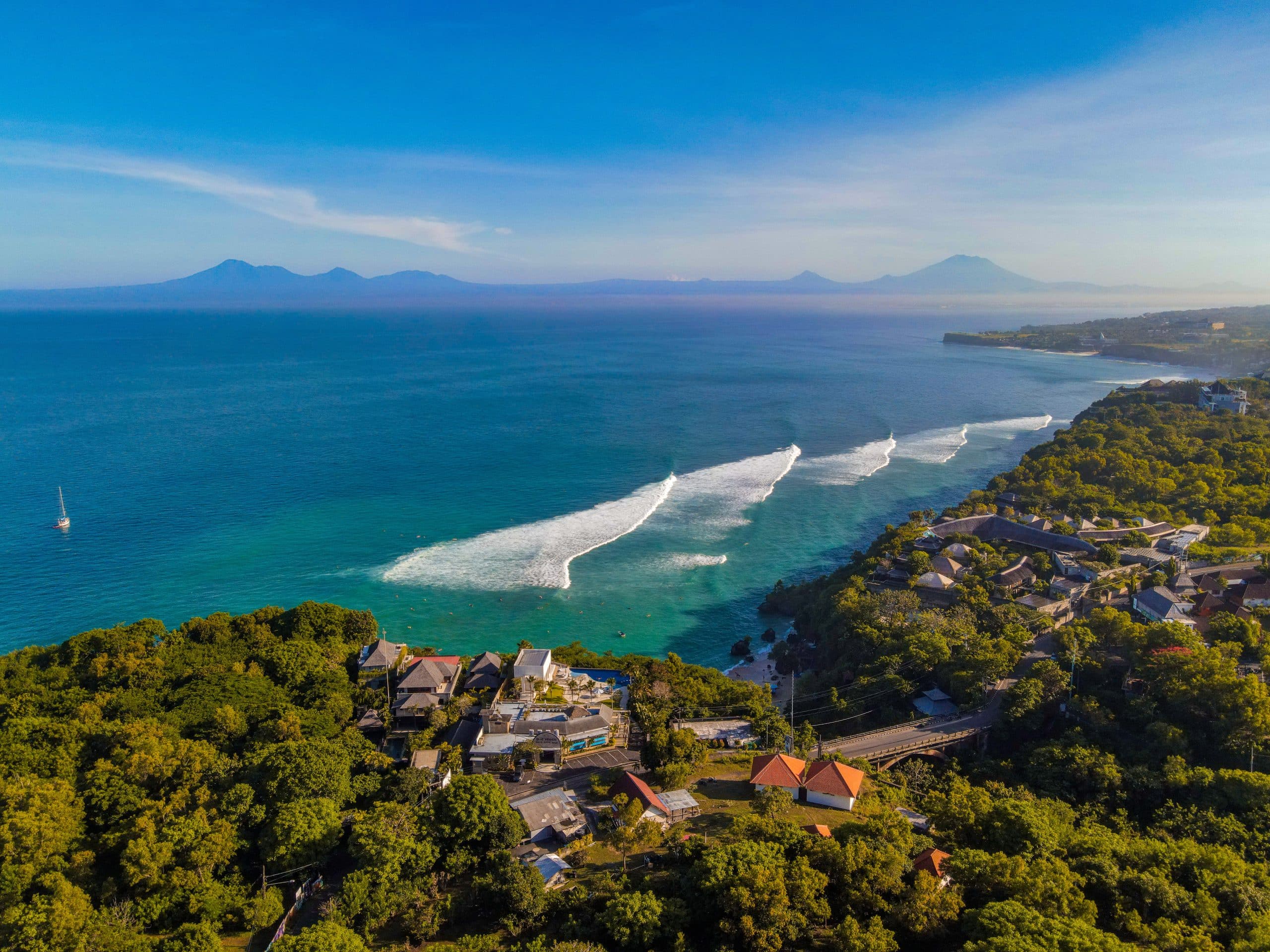
Uluwatu and the Bukit: Dramatic Terrain, Deliberate Pace
The Bukit Peninsula occupies Bali's southwestern extremity like an afterthought, but it's the island's most geographically distinctive region. Limestone cliffs rise abruptly from the Indian Ocean. Swells arrive with force and clarity. The landscape itself—golden stone, turquoise water, dramatic weather—shapes your daily consciousness in ways the gentler north coast doesn't.
Uluwatu isn't a neighborhood in the traditional sense. It's scattered across clifftop developments, each with its own beach club or residential community. Getting around requires commitment: a scooter is not optional, it's essential. The walkability that defines Canggu or Seminyak simply doesn't exist here.
But the trade is explicit and generous. You get world-class surf breaks (Uluwatu itself, Padang Padang, Bingin). You get views that photograph well enough to make friends jealous. You get a community organized around something genuine—the ocean, the waves, the landscape—rather than the abstract idea of being "in Bali." You get a slower rhythm, a smaller social circle, and the sense of having made an intentional choice rather than defaulted to the obvious option.
Who moves here: Serious surfers. Those for whom natural beauty ranks above social infrastructure. Travelers who've already done Canggu and want something slower and more specific.
Residential pricing: Quality clifftop villas range from IDR 10–22 million monthly, with premium ocean-view properties commanding significant premiums. The value proposition is strong if you know what you're trading for.
Jimbaran: The Sheltered Bay Option
Jimbaran Bay sits between Kuta and the Bukit, geographically and philosophically. The reef creates a natural calm, making it South Bali's best destination for actual swimming, paddleboarding, and family water activities rather than serious surfing.
The neighborhood retains something of its original character as a fishing village, though modernization is creeping in. The seafood restaurants along the beach aren't tourist traps—they're genuine local institutions where Balinese families eat on weekends. The beach itself is less crowded than Seminyak or Kuta. The airport is close enough that frequent travelers appreciate the convenience.
Jimbaran suits families, those who prioritize calm water and genuine neighborhood feel over nightlife infrastructure, and travelers who want to be near the tourist infrastructure without being embedded in it.
Residential pricing is moderate, though less documented than Canggu or Seminyak. Expect IDR 10–20 million for solid family villas.
Sanur: The Thoughtful Alternative
Sanur is South Bali's most consistently underrated neighborhood. It doesn't have Canggu's visible energy or Seminyak's restaurant fame. It rarely appears in "top neighborhoods" lists, which is partly why it remains genuinely pleasant.
The reef-protected bay creates calm, swimmable water—objectively better than Seminyak's more turbulent beach. The beachfront promenade is genuine, uncrowded, and lined with local restaurants and cafes rather than tourist venues. There's a significant community of long-term expat residents here, people who've lived in Bali for years and chosen to stay in Sanur specifically.
The neighborhood has established international schools, reliable healthcare (Denpasar, Bali's administrative capital and hospital hub, is a short drive), and a residential character that actually feels like a neighborhood rather than a tourist district with villas.
For families with children, retirees, or anyone seeking a genuine community feel without the constant hum of transient tourism, Sanur delivers exceptional quality of life at the island's best value ratios.
Residential pricing: Villas range from IDR 8–18 million monthly—some of the most competitive pricing in South Bali for equivalent quality.
What You Actually Do Here
Water, Waves, and Movement
South Bali is defined by ocean access. The style varies dramatically by neighborhood:
- Surfing: Uluwatu and the Bukit for serious swells; Canggu and Echo Beach for consistent, learner-friendly breaks; Kuta for absolute beginners
- Swimming and paddleboarding: Sanur and Jimbaran bays for calm water; Nusa Dua for lagoon-like conditions
- Diving and snorkeling: Day trips to Nusa Penida are straightforward and reward genuine exploration
- Kayaking: Available along most of the coastline; the Jimbaran and Sanur bays are particularly accessible
Wellness and the Culture of Self-Care
South Bali has the island's highest concentration of yoga studios, gyms, and legitimate wellness practitioners. Canggu and Seminyak compete on sheer volume. Ubud, further north, leads on depth and traditional practice. But the infrastructure is densest here, and the community most engaged. If your daily rhythm includes physical practice, South Bali supports it more naturally than anywhere else on the island.
Eating and Social Continuity
Seminyak's restaurant scene rivals cities many times its size. Canggu's cafe culture attracts serious coffee professionals. Jimbaran has a different offering: open-air seafood dining with genuine atmosphere. Every neighborhood in South Bali has more dining quality per square kilometer than virtually anywhere else in Southeast Asia. Restaurant culture here is a legitimate form of social infrastructure, not just entertainment.
Making the Actual Choice
The right neighborhood depends on three concrete questions:
What does your daily work look like? Remote workers benefit from Canggu's built-in community and social structure. Those with more traditional schedules or commutes might prefer Seminyak's proximity to services or Sanur's calm.
How important is social density? Canggu if you want frequent spontaneous human interaction. Seminyak if you want curated quality. Sanur or Jimbaran if you want genuine neighborhood life rather than social infrastructure.
What's your relationship to the ocean? Surfers need the Bukit or Canggu. Swimmers and families need Sanur or Jimbaran. Those indifferent to water activities have more flexibility across neighborhoods.
There isn't a "best" neighborhood in South Bali. There are neighborhoods optimized for different lives. The task is honest self-assessment: not who you want to be in Bali, but who you actually are, and what environment would amplify your best self rather than requiring constant compromise.
FAQ
How long should I rent before committing to a neighborhood? Most experienced residents recommend at least three months in your first choice. Daily rhythms, seasonal variations, and the reality of community take time to emerge. A month is tourism. Three months starts to feel like actual living.
Is it worth being in the expensive central parts of these neighborhoods, or should I choose the periphery? Location calculus varies by neighborhood. Canggu's walkability and social scene justify being close to the center; you'll naturally spend more time engaging with the neighborhood. Seminyak's restaurants and shops benefit from proximity. Sanur's value is partly because the entire neighborhood is pleasant, so periphery becomes less relevant. Start by understanding what you'll actually do daily, then optimize for that.
Can you maintain a quiet, introverted life in Canggu? Yes, though it requires intentional boundaries. You can work from your villa, maintain a tight friend group, and avoid the main social venues. But you'll be swimming against Canggu's current. Seminyak, Sanur, or the Bukit are more naturally suited to those who prefer depth over breadth in social connection.
What's the realistic monthly cost of living per neighborhood? Rental is one component. Add IDR 3–8 million monthly for food, services, and utilities depending on lifestyle choices. A comfortable solo life in Sanur costs roughly 60–70% of an equivalent life in central Canggu. The difference compounds significantly over years.
Should I choose a neighborhood based on where my friends are? Community matters, but be cautious of choosing based on existing social groups. Your actual life will be built on daily rhythms and neighborhood texture, not on one or two established friendships. Find a neighborhood that supports how you actually want to live; friendships follow naturally from that foundation.