The Maturity Advantage
There's a particular kind of confidence that comes with joining a neighborhood that has already figured itself out. Seminyak, over more than two decades as Bali's primary address for international residents, has accumulated something that money alone cannot buy: institutional knowledge, tested networks, and the accumulated wisdom of thousands of people who've already asked every question you're about to ask.
This is not the Seminyak of the 1990s—a scrappy beach town with attitude and very little else. It's not even the Seminyak of fifteen years ago, when it was primarily known as a party destination with sand and sunsets as secondary features. What exists now is far more nuanced: a mature residential ecosystem where the infrastructure decisions have already been made, the service providers have been stress-tested by thousands of residents, and the social fabric has depth.
When you move to a place where an expat community has been rooted for two decades, you inherit an enormous advantage. The best notary is already known. The reliable motorcycle mechanic has a reputation. The English-speaking doctor has a patient file system. The grocery delivery service that actually shows up on time has been recommended so many times it's practically canonical. This infrastructure—unglamorous, invisible, utterly essential—is Seminyak's least-discussed but most valuable asset.
The Stratification of Character
Seminyak is no longer a monolith. The neighborhood has evolved into distinct sub-neighborhoods, each with its own rhythm, price point, and ideal resident profile. Understanding these divisions is essential to knowing whether Seminyak suits you.
Central Seminyak: The Cosmopolitan Heart
The Jalan Kayu Aya and Oberoi corridor represents Seminyak at its most refined. This is where the Michelin-track restaurants cluster, where international hotel brands maintain their Bali flagships, where the boutique retail is genuinely considered. Central Seminyak is expensive, beautiful, and unmistakably cosmopolitan.
This sub-neighborhood suits professionals, senior creatives, and anyone for whom the convenience of maximum infrastructure justifies the premium. You're not pioneering here—you're simply accepting that quality costs, and you're willing to pay it. There's no backpacker hostels, no startup co-working spaces, no cultural tourism. There's excellent espresso, Michelin-level food, and the kind of curated retail that makes you feel like you're in a genuinely sophisticated place.
Northern Seminyak: The Family Territory
As you drift north toward Petitenget, something shifts. The neighborhood widens, literally and spiritually. The properties get larger. The nightlife noise recedes. The villas-to-price ratio tilts dramatically in your favor compared to the central corridor. This is where families establish themselves, where longer-term residents choose to nest.
Northern Seminyak is less about being seen and more about actually living. The infrastructure is still exceptional—you're still minutes from hospitals, schools, and specialty services—but you're not paying the premium for proximity to the premium venues. It's Seminyak without the performance aspect.
The Beach Corridor: The Social Axis
Jalan Petitenget, running parallel to the shore, is the neighborhood's entertainment spine. This is where the beach clubs cluster, where the fine dining establishments position themselves for sunset service, where the social scene concentrates itself. Living here means maximum convenience for the nightlife and social calendar, minimum convenience for anyone seeking quiet.
The beach corridor suits people for whom being embedded in the social scene is a genuine priority. It's not for families with young children seeking bedtime before 10 PM, and it's not for anyone whose idea of a Saturday night is reading in bed.
The Texture of Daily Life
Food and Markets
Seminyak offers genuine choice in how you source food. The traditional Pasar Seminyak operates daily and serves residents who want to engage with the local produce market—the chaos, the negotiation, the genuine connection to how Balinese people eat. The vendors know regular foreign faces and often offer better prices to repeat customers.
For those whose comfort level requires Western-format retail, Circle K and Bintang supermarkets are accessible via short scooter rides and stock everything from imported cheese to local vegetables. The quality has improved substantially over the past five years.
Coffee and Cafes
Seminyak hosts one of Bali's most competitive and accomplished café scenes. Revolver Espresso on Jalan Kayu Aya functions as the canonical coffee landmark—not because it's the only good option, but because it's the standard against which others measure themselves. Multiple additional specialty cafes ensure that wherever you settle, an excellent morning coffee is a five-minute walk away. The standards are high because the customer base expects them to be.
Fitness and Wellness
Gyms, yoga studios, Pilates reformer facilities, and wellness centers are dense in Seminyak compared to any other Bali neighborhood except Canggu. If your wellness routine is non-negotiable—and for many residents, it's foundational to maintaining mental health abroad—you can maintain it here without compromise. The quality of instruction ranges from excellent to exceptional.
Healthcare
BIMC Hospital, located in nearby Kuta, handles the bulk of expat healthcare needs and maintains the highest standards in Bali. Several international clinics throughout Seminyak offer English-speaking practitioners for routine care. For specialized care or serious conditions, Denpasar's Sanglah Hospital and various specialist practices in the capital become necessary, but these are 30–45 minutes away depending on traffic.
The Beach: Promise and Reality
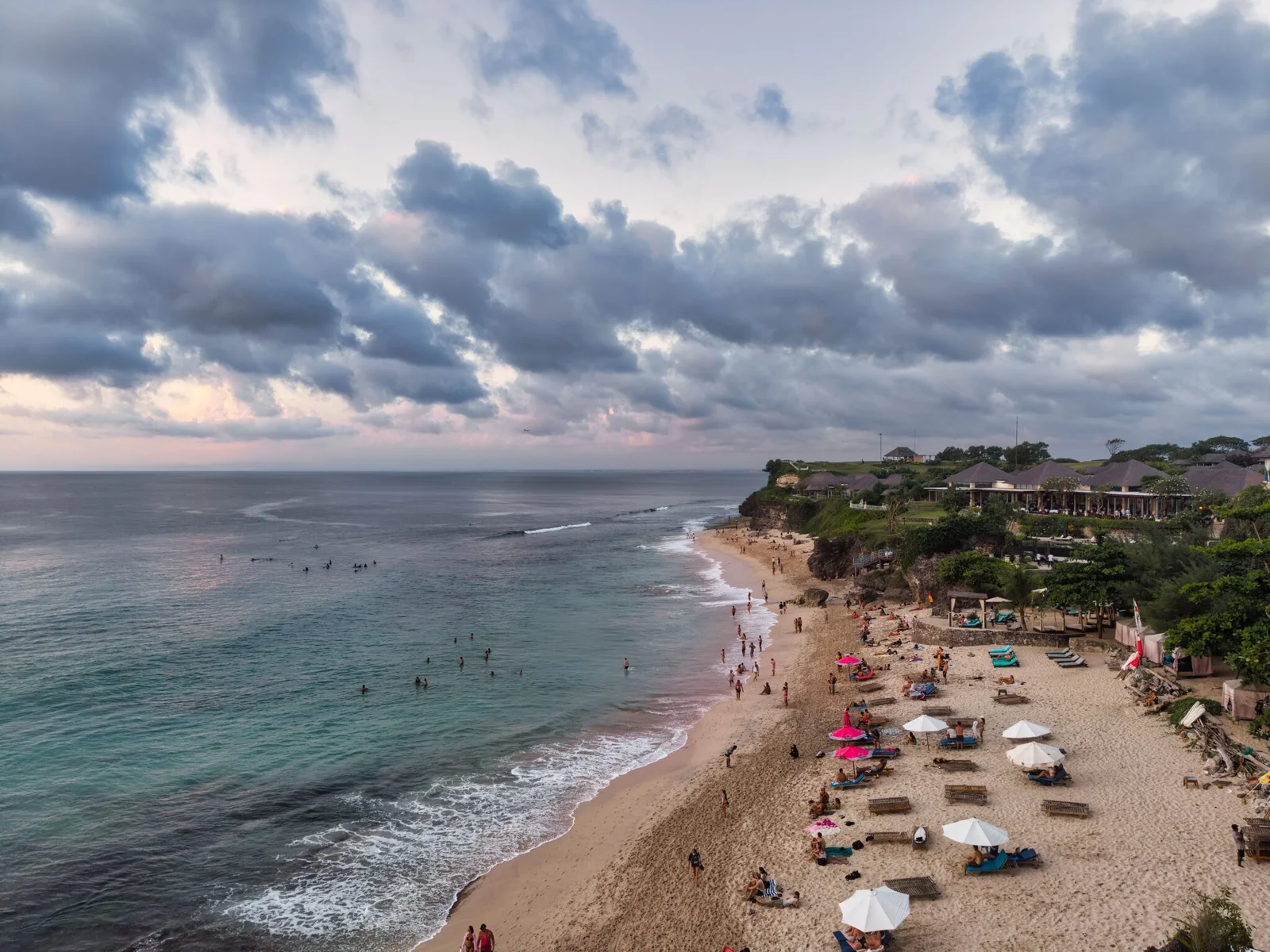
Seminyak's beach is visually spectacular and genuinely useful, but not in the way new arrivals sometimes imagine. The Indian Ocean swell rolls through consistently here. The beach's gradient creates strong backwash and rip currents. The water is excellent for surfing and terrible for casual swimming, particularly with young children.
What makes Seminyak's beach genuinely valuable is the beach club culture that has evolved along it. Potato Head, Ku De Ta, and several adjacent venues offer world-class beach club experiences—sophisticated food, excellent cocktails, ocean views—accessible from almost any Seminyak address in roughly fifteen minutes. The beach itself is magnificent for walking at dawn, watching sunset, and understanding why people choose to live here.
The Investment Reality
Seminyak is Bali's most expensive residential market, and understanding the price structure is essential before committing.
Land prices in central Seminyak range from IDR 1 billion to IDR 4 billion per are, depending on micro-location, size, and access. Northern Seminyak is considerably cheaper—often 30–40% less for comparable land quality.
Rental markets reflect this hierarchy. A one-bedroom villa rents for IDR 10–20 million monthly. Three to four-bedroom villas range from IDR 25–60 million monthly, depending on finishes and location.
Short-term rental yields for well-managed properties typically run 12–18% gross annually. The premium reflects genuine infrastructure quality, consistent demand from tourists and expats, and a well-established resale market. Seminyak property has appreciated more reliably than almost any other Bali neighborhood and has the most developed comparable market data.
The cost premium is not arbitrary. You're paying for proven market stability, developed service infrastructure, and an exit strategy that actually exists if circumstances change.
The Frictions Worth Acknowledging
Traffic and Mobility
Jalan Kayu Aya and Jalan Double Six, Seminyak's primary arteries, experience severe congestion during peak hours—typically 8–9 AM and 5–7 PM. Residents learn the side-road network out of necessity. Scooter mobility is not optional; it's foundational. If you're uncomfortable driving a motorcycle, you'll either need a driver or accept that some of Seminyak's advantages disappear.
Noise
Central Seminyak's economy is partially built on nightlife. Evening noise, particularly on weekends, is a genuine consideration for residents. Properties set back from Jalan Petitenget and the main entertainment zones are measurably quieter. Northern Seminyak is notably more peaceful than the center.
Cost Structure
Seminyak is the most expensive place to live daily in Bali. The premium venues—restaurants, cafes, retail—are everywhere. Finding affordable options requires deliberate effort and somewhat defeats the purpose of choosing Seminyak. The neighborhood works best for people who've accepted and budgeted for the premium.
FAQ
Q: Is Seminyak better for long-term living than Canggu?
Neither is objectively "better." Seminyak suits people who prioritize established infrastructure, premium services, and a more mature social scene. Canggu suits people who want proximity to world-class waves, a concentrated digital nomad community, and a less formal, more experimental character. Choose based on your actual priorities, not on reputation.
Q: Can you live affordably in Seminyak?
Technically, yes—by settling in the northern boundary areas, avoiding the premium venues, and cooking at home. But this approach somewhat undermines the reason to choose Seminyak in the first place. The neighborhood works best when you've genuinely accepted the cost structure. If budget is primary, other neighborhoods serve you better.
Q: What visa types do most long-term Seminyak residents hold?
The answer is mixed. Families with children in international schools often use social visas, retirement visas, or KITAS status. Digital nomads increasingly use the B211A visa. Investors sometimes hold business visas. Current regulations change regularly, so consult a specialized immigration advisor rather than relying on community hearsay.
Q: Is Seminyak a good investment if I'm not planning to live there?
Possibly, but requires clarity on your timeline. Short-term rental yields are solid, and property appreciation has been reliable. However, the market is mature—you're not capturing early-stage appreciation like you might in emerging neighborhoods. Invest if you want steady income and proven exit strategies, not if you're seeking explosive growth.
Q: How far is Seminyak from Bali's international school options?
The primary international schools (Bali Island School, Green School, Sekolah Ciputra) are 25–45 minutes away depending on traffic, requiring either a driver or significant scooter commitment. This is a real consideration for families prioritizing school proximity over neighborhood prestige.