The Overlooked Edge in Bali's Property Market
There's a particular rhythm to property investment conversations in Bali. They tend to follow a predictable script: Canggu, Seminyak, Berawa, perhaps Pererenan if you're feeling adventurous. These locations are undeniably strong. But therein lies the problem.
When a market becomes consensus, the obvious opportunities have already been claimed. The astute investor begins asking a different question: where is the market going, not where has it already been?
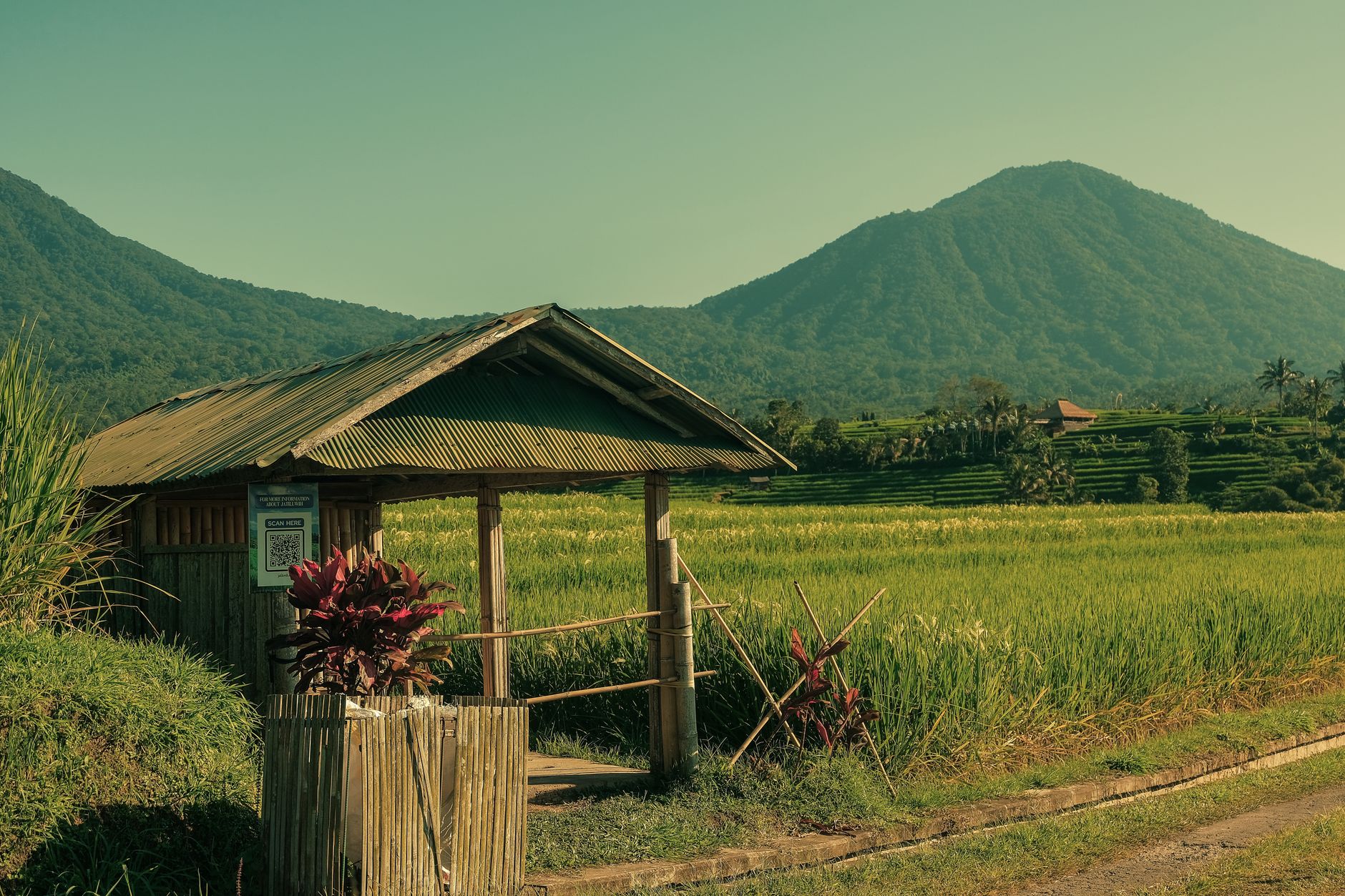
Rural Bali — the rice terrace expanses, river valleys, and mountain villages that extend beyond the developed south — presents a contrasting thesis. Not because urban Bali is declining, but because the conditions that reward early positioning are distinctly rural. Lower land costs per square meter. Substantially reduced construction expenses. Superior land-to-investment ratios. And increasingly, a growing segment of travelers and residents who are actively seeking what the congested south can no longer authentically offer.
This isn't contrarian thinking for its own sake. It's pattern recognition.
Who Is Actually Choosing Rural Bali
Investment thesis must begin with demand reality. Understanding who chooses rural property — and why — transforms the conversation from speculation into strategy.
The Extended Traveler
The three-to-six-month visitor has fundamentally reshaped Bali's property landscape. These are often creative professionals, writers on sabbatical, academics on research leave, entrepreneurs testing remote work arrangements. They're not seeking nightlife or proximity to tourist infrastructure. They're purchasing authenticity, genuine quiet, and the economics of sustainable long-term living.
Urban south Bali cannot deliver this at any price point. The noise, congestion, and commercialization are structural features, not bugs to be fixed. Rural areas don't need to compete on amenities — they're being chosen precisely because they lack certain urban trappings.
The Wellness Traveler
Bali's wellness sector represents one of its highest-value and fastest-expanding tourism segments. The retreat guest — typically staying 7-14 days, paying premium rates for yoga, meditation, spa, and holistic programming — has a pronounced rural preference. The natural setting isn't supplementary to the offer. It's foundational.
Ubud-area retreat centers, highland wellness properties, and rural eco-lodges serve a consistently high-spending clientele. These guests aren't price-sensitive in the way mainstream tourists are. They're quality-of-environment sensitive.
The Cultural Seeker
Bali's authentic Hindu religious practice, with its temple festivals, village ceremonies, and spiritual traditions, remains primarily rural. Visitors specifically traveling to experience Balinese culture — not a curated version of it, but the living version — orient naturally toward villages and communities outside the tourist corridor.
This segment grows each year. The market for authentic cultural experience globally is expanding, not shrinking.
The Remote Professional
The pandemic didn't create work-from-anywhere culture; it accelerated its inevitability. The professional working from Bali seeks what rural settings uniquely provide: reliable internet connectivity (now broadly available), low-noise environment, quality living at reasonable cost, and absence of distracting tourism infrastructure.
Ten years ago, reliable rural internet was a limitation. Today, it's solved. This opened an entirely new geographic opportunity set.
The Numbers Tell a Different Story
Land Price Reality
Land pricing across Bali's property market reveals a dramatic spread:
- Canggu, Berawa, Seminyak corridor: IDR 800 million–3+ billion per are (100 sqm)
- Ubud and immediate surrounds: IDR 150–500 million per are
- North Bali coastal areas: IDR 100–300 million per are
- Tabanan regency (western rice fields): IDR 80–200 million per are
- East Bali (Karangasem, Amed): IDR 50–150 million per are
The multiplier effect is substantial. The same capital investment buys 5-10x more land area in rural locations. This advantage compounds when considering development potential.
Construction Economics
Building costs in rural Bali operate under different fundamentals. Local labor rates are 20-30% lower than in developed south areas. Site logistics are less complex — fewer municipal approvals, simpler access. Material sourcing benefits from proximity to source: bamboo, local stone, traditional timber arrive at better pricing.
A well-constructed villa in rural Bali costs materially less per square meter than equivalent build quality in Canggu. This cost advantage is real and substantial.
Revenue Potential
Here's where the thesis becomes interesting. The rental revenue gap between rural and urban is considerably smaller than the investment gap.
Premium eco-lodge or wellness villa (Ubud area): IDR 2–8 million per night during peak season, with seasonal occupancy rates of 50-70%
Boutique rural property (cultural/scenic location): IDR 1.5–5 million per night, increasingly accessing this price range as awareness grows
Monthly long-stay rural villa: IDR 5–15 million monthly for well-appointed properties, increasingly appealing to the extended-stay market
The mathematics favor rural properties in most scenarios. Lower investment cost + competitive revenue generation + higher yield potential = the formula that serious investors evaluate.
The Geographic Opportunity Map
Ubud Surrounds: The Established Play
Tegalalang, Payangan, Petelu — the areas adjacent to Ubud proper represent the most mature rural market. Land prices reflect this maturity (still substantially below urban south but higher than deeper rural), but infrastructure is proven. Existing demand ecosystem, established tour operators, wellness retreat centers, visitor familiarity. This is rural Bali with training wheels.
Entry cost is moderate. Risk is lower. Growth potential is steady rather than explosive.
Tabanan Regency: The Overlooked Adjacent Play
West of Canggu, the extraordinary rice field landscape extends into genuine rural territory. Increasingly, developers and sophisticated buyers are recognizing this: Canggu proximity without Canggu density or pricing. The infrastructure of the western corridor is improving. Road access is being upgraded. Internet reliability is expanding.
This is where price hasn't yet fully reflected location potential.
North Bali: The Emerging Coastal Alternative
The Buleleng coast — Lovina, Singaraja, and surrounding areas — represents Bali's least developed major coastal region. Lower prices, consistent demand from divers and nature-focused travelers, genuine scarcity value. The market is underdeveloped, which is precisely why early positioning matters.
East Bali: The Frontier
Amed, Tirta Gangga, Ujung — spectacular volcanic landscape, cultural authenticity, and growing traveler awareness. The slowest to develop of Bali's major regions, which translates to the greatest opportunity for positioned investors. The market is nascent enough that early participants can establish value rather than compete for it.
Understanding the Trade-offs
Rural investment isn't frictionless. It requires acknowledging genuine challenges:
Infrastructure complexity: Water and power reliability require planning. Road access quality matters for both construction and guest access. Distance from emergency services and international schools is real for some buyer profiles.
Market thickness: Rural property moves more slowly. The buyer pool is smaller. Exit timelines extend. This isn't a problem for investors with patient capital; it's a constraint for those requiring liquidity.
Management logistics: Rental management companies operate primarily in the Ubud corridor. Beyond that, you're engaging resident managers or local partners. This requires trustworthy relationships and clear operational systems.
Development certainty: Rural areas are less regulated, which cuts both ways. Opportunity exists, but so does unpredictability in permit processes and infrastructure planning.
These aren't disqualifying factors. They're variables to account for in the investment model.
FAQ
What makes rural Bali property more suitable for long-term investment than quick returns?
Rural markets develop slower but more sustainably. If you're seeking appreciation over 5+ years and can absorb longer holding periods, the lower entry cost and growing demand from extended travelers creates compelling value. Quick-flip strategies favor established urban markets with liquid buyer pools.
How does infrastructure development affect rural property values?
Positively, but gradually. Road improvements, internet reliability, and utility infrastructure upgrades tend to follow rather than precede rural property appreciation. Properties positioned in areas with planned development capture value before infrastructure arrives.
Can rural properties achieve comparable rental income to urban properties?
Yes, but through different mechanisms. Urban properties capture high nightly rates from short-term tourism. Rural properties achieve comparable returns through long-stay contracts, wellness retreat bookings, and seasonal occupancy spikes. The revenue model differs; total return potential is comparable for well-positioned properties.
What's the realistic timeline for exiting a rural property investment?
Budget 12-24 months for a quality rural property sale, versus 3-6 months for premium urban Bali. The market is thinner. However, premium rural properties have a defined market — wellness travelers, cultural enthusiasts, remote professionals. Patient capital is rewarded with better exit valuations.
How important is property management in rural areas?
Critical. Rural properties require either on-site management or strong local partnerships. Unlike urban areas where professional management companies compete for business, rural management often means developing direct relationships with local operators or maintaining your own presence. Factor management capability into investment decisions.