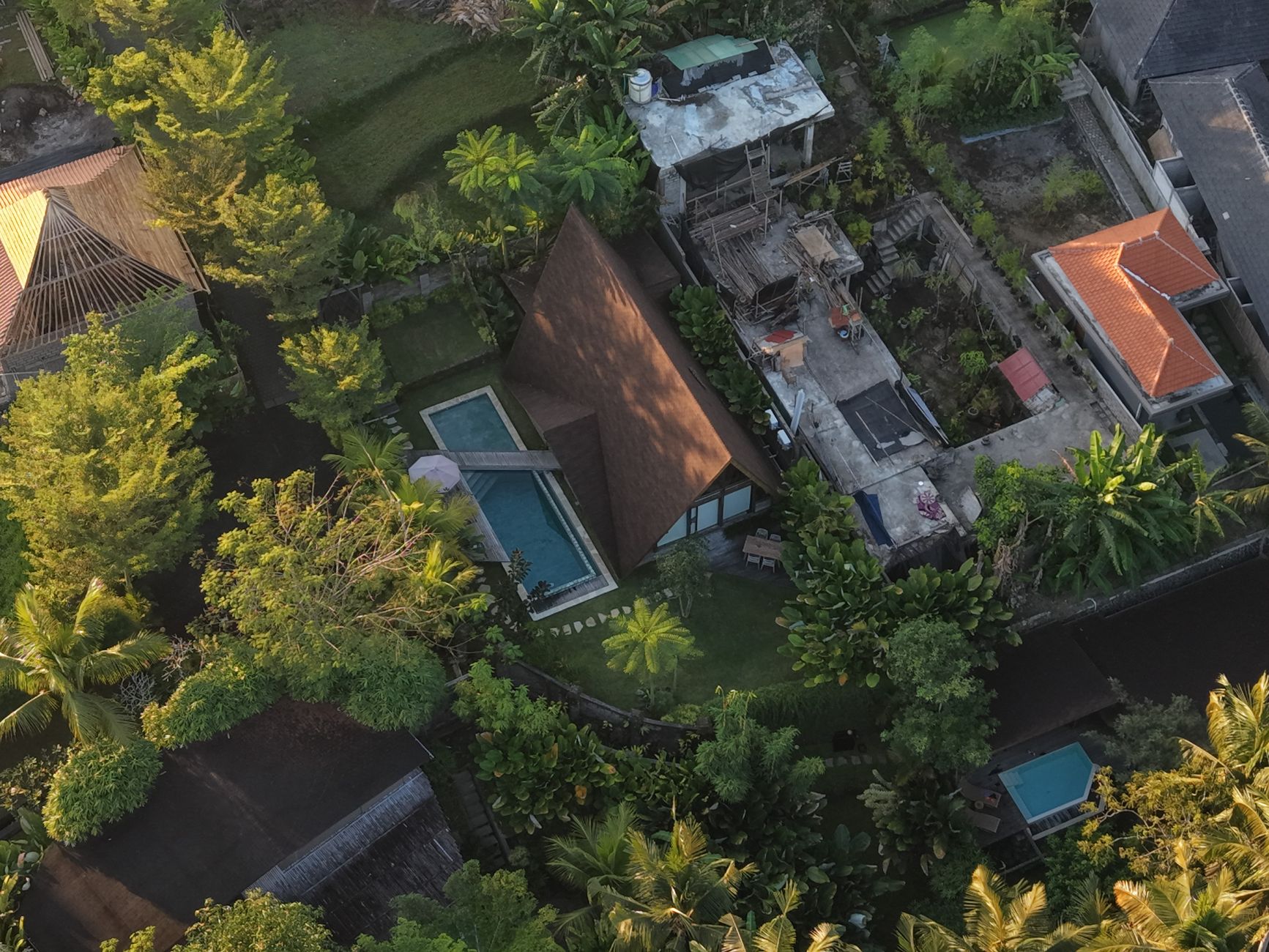
Understanding Bali's Property Framework: Security Through Knowledge
Bali's property market has minted genuine wealth for foreign investors. It has also extracted painful losses—typically from those who moved fast without grasping Indonesia's ownership architecture.
The legal system isn't designed to exclude foreign capital. It's simply specific. And specificity, when properly understood, becomes your protection.
This is the difference between an investor who navigates Bali property with confidence and one who discovers, too late, that their supposed ownership rests on a handshake and a hope. The framework itself isn't complicated. But ignoring it is catastrophic.
The Foundational Reality: Foreign Ownership Has Limits
Indonesian law draws a clear line: foreign individuals cannot own Hak Milik—freehold land title. This isn't negotiable, and no amount of local connections changes it.
Yet this limitation doesn't close the door on investment. It simply defines which doors remain open.
The dangerous path is the informal one. Foreign investors who operate through local "nominees"—relatives, business partners, or hired stand-ins holding title on their behalf—exist in legal quicksand. When that nominee dies, divorces, faces bankruptcy, or simply decides to keep the property, the investor's recourse is minimal. The law doesn't recognize side agreements or verbal arrangements. What matters is whose name appears on the official certificate.
The secure path exists. It requires using one of Indonesia's legitimate legal structures, both of which provide real protection and genuinely transferable ownership rights.
Path One: The Company Structure (PT PMA)
A PT PMA—or Perseroan Terbatas Penanaman Modal Asing—is an Indonesian company with foreign shareholders. This structure unlocks the ability to hold land under Hak Guna Bangunan (HGB): the Right to Build.
Under HGB, your company controls the property for 30 years initially. This term extends for 20 additional years, and can renew for another 30. That's 80 years of continuous rights if managed properly. For practical purposes, it's generational security.
When a PT PMA Makes Strategic Sense
Choose the company structure if:
- You're operating commercially: renting villas, running a resort, developing multiple units, or managing properties as active business
- You want the strongest legal position: owning both land and buildings under a single legal entity with clear, extendable rights
- You're building a portfolio: acquiring multiple properties benefits from a single corporate framework
- You plan to sell or refinance: institutional buyers and lenders strongly prefer PT PMA structures
The PT PMA Setup
The structure requires:
- Minimum authorized capital of IDR 10 billion (roughly USD 650,000), though the actual paid-in requirement is lower
- Annual tax compliance and financial reporting
- Business classification codes matching actual use—a villa rental operation needs tourism-sector coding
- Ongoing corporate governance: annual shareholder meetings, audited financials, regulatory filings
Setup through a qualified law firm runs USD 3,000–8,000. Annual compliance costs USD 1,000–3,000 depending on complexity. These are legitimate costs of legal security, not obstacles.
Path Two: The Leasehold Structure (Hak Sewa)
Leasehold is simpler and often overlooked. A foreign individual can lease land directly for 25–30 years (sometimes longer), with extension options. No company formation required. Faster approval. Lower setup costs.
For straightforward property investment—owning a villa, purchasing a rental property, acquiring land for personal use—leasehold often makes more sense than PT PMA.
What You Actually Acquire
Under a properly structured leasehold:
- The right to occupy and use the property throughout the lease term
- The right to sublet, if the agreement permits (critical for rental operations)
- The right to improve and develop, subject to obtaining necessary permits
- Clear extension terms, if explicitly documented and notarized
What You Don't Acquire
Be clear on what leasehold isn't:
- You don't own the underlying land
- You have no automatic right to extend unless extension terms are written into the notarized agreement
- If the landowner becomes insolvent or disputes arise over the underlying title, your position becomes complicated
Making Leasehold Bulletproof
Leasehold's perceived weakness—the lack of land ownership—is largely theoretical if documentation is done correctly:
- Extension rights must be explicit: not assumed, not vague, but specified in exact terms and notarized
- The underlying title must be clean: verify that the landowner holds genuine freehold (Hak Milik) with no encumbrances
- Permitted uses must be stated: ensure your intended use (residential, rental, commercial) is explicitly included
- Subletting must be authorized: if you plan to rent the property, the right to sublease commercially must be in the agreement
When executed properly, a 30-year leasehold with explicit renewal options provides the security most investors need.
Due Diligence: The Non-Negotiable Process
No matter which legal structure you choose, the same due diligence applies. This is where most mistakes happen—and where proper attention prevents them entirely.
Verifying the Title
The land certificate must be verified at the Badan Pertanahan Nasional (BPN)—Indonesia's National Land Agency. This verification confirms:
- The certificate is authentic (forgeries exist)
- The registered owner is who you're buying from
- No mortgages, liens, or legal claims encumber the title
- The land hasn't been subject to ownership disputes or court challenges
- Previous transfers were properly registered
Confirming Zoning and Permitted Use
Bali's zoning classifications—agricultural, residential, tourism, mixed-use—determine what you can legally do with the property. Verify:
- The current zoning designation and whether it permits your intended use
- Whether the land has been properly converted from agricultural to another category (these conversions require government certification)
- Building permits align with physical structures
Building permits matter. The Izin Mendirikan Bangunan (IMB)—the construction permit—must exist for any structure. What was built must match what was permitted in floor area, height, and use classification.
The Environmental and Ownership Layer
Beyond title and zoning, verify:
- Whether the property sits on reclaimed land or near water (different regulations apply)
- Tax payment history (unpaid property taxes create liability for the new owner)
- Any existing agreements with neighbors or adjacent properties
- Whether the property is subject to customary land claims from indigenous communities (rare but possible in some areas)
The Notary: Your Essential Gatekeeper
All Indonesian property transactions must go through a Notaris-PPAT—a notary with land deed authority (Pejabat Pembuat Akta Tanah). This person:
- Verifies identities of all parties
- Reviews the land certificate and confirms its validity
- Checks for existing encumbrances or claims
- Drafts the legal deed of transfer
- Executes the transaction
- Registers everything with the BPN
Critical point: engage your own notary, not the seller's. While most notaries are professional, their primary obligation runs to whoever hired them. Your notary's obligation is solely to you.
The Real Cost of Acquisition
Beyond the purchase price, budget for:
| Item | Rate/Cost |
|---|---|
| Land and Building Transfer Tax (BPHTB) | 5% of purchase price (buyer pays) |
| Income Tax on Sale (PPh) | 2.5% of purchase price (seller pays, often negotiated to buyer) |
| Notary Fees | 0.5–1% of purchase price |
| Independent Legal Review | USD 500–3,000 |
| Title Verification and Due Diligence | USD 1,000–3,000 |
| PT PMA Formation (if applicable) | USD 3,000–8,000 |
| Annual PT PMA Compliance | USD 1,000–3,000/year |
Total transaction costs typically run 8–12% above the listed purchase price. This isn't excessive—it's standard for Indonesia. Factor it into your investment analysis.
Mistakes That Destroy Value
Operating through nominee arrangements: This is legally prohibited and practically disastrous. When it fails, it fails completely. There is no legal recourse.
Skipping independent legal representation: Hiring your own lawyer costs USD 500–3,000 and protects an investment worth hundreds of thousands. The ROI is infinite.
Closing without complete due diligence: Never transfer full payment before title verification is complete, zoning is confirmed, and your lawyer has cleared the transaction. Structure payments to coincide with each verification milestone.
Choosing speed over documentation: Verbal agreements, handshake deals, and "we'll formalize later" approaches inevitably lead to disputes. The notarized deed is your only legal document. Everything else is irrelevant.
Trusting the seller's advisors: The real estate agent, the seller's lawyer, even the seller's notary—none of these people represent your interests. They represent the seller's interests. Assume they do.
Building Real Ownership
Bali's property framework is actually investor-friendly once understood. Both PT PMA and leasehold structures provide genuine security and transferable rights. The key is treating the legal architecture with the respect it deserves.
Investors who move thoughtfully—who engage qualified professionals, complete thorough due diligence, and execute through proper legal structures—acquire not just property but genuine peace of mind. They own something real, protected by Indonesian law, transferable to heirs or future buyers.
Those who cut corners on legality typically learn, expensively, why the framework exists.
Frequently Asked Questions
Can I simply buy land as an individual foreigner?
No. Indonesian law does not permit foreign individuals to hold freehold land title (Hak Milik). You must use either a PT PMA company structure (holding Hak Guna Bangunan) or a leasehold agreement (Hak Sewa). Both are legitimate and provide genuine security when properly documented.
How long can I actually hold property through these structures?
Under PT PMA, you hold Hak Guna Bangunan for 30 years, renewable for 20 years, then extendable again for 30 years—potentially 80 years of continuous rights. Leasehold typically runs 25–30 years with explicit renewal options. Both provide generational security if documented properly.
What happens if I die—can my heirs inherit the property?
Yes. Both PT PMA structures and leasehold agreements can be transferred to heirs through the estate process. This requires proper legal documentation and Indonesian inheritance procedures, but inheritance is fully permitted. Your lawyer should structure the agreement with succession in mind.
Is it safe to buy through a nominee—a local friend or family member?
No. This arrangement is legally prohibited and offers zero protection. If the nominee dies, divorces, faces bankruptcy, or decides to keep the property, you have no legal recourse. The deed is in their name. The law recognizes only their rights. Avoid this structure entirely.
How much should I budget beyond the purchase price?
Expect 8–12% in total costs: 5% transfer tax, 2.5% income tax, 0.5–1% notary fees, plus legal review (USD 500–3,000), due diligence (USD 1,000–3,000), and if using PT PMA, company setup (USD 3,000–8,000). These are standard, legitimate costs—not hidden fees.