Where Cliffs Meet Capital: Investing in Bali's Most Constrained Market
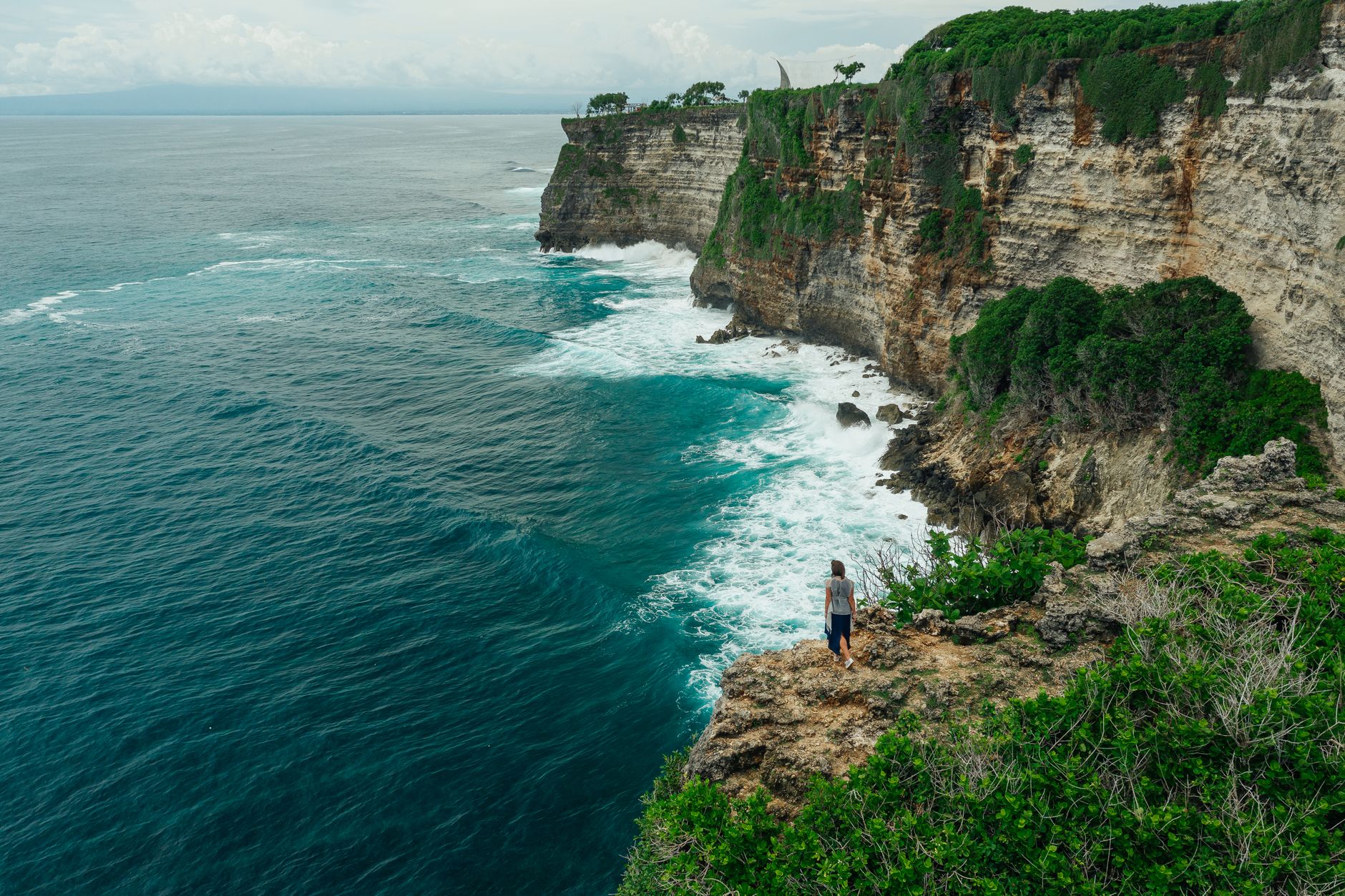
There is a particular moment at dusk when the limestone cliffs of Bingin and Uluwatu seem to glow amber against the Indian Ocean. Surfers paddle out to their breaks below. The air carries salt and possibility. It is easy to understand why this corner of Bali's Bukit Peninsula has captured the imagination of travelers, wellness seekers, and increasingly, a sophisticated class of property investors.
But the appeal is no longer merely romantic. What was once a remote outpost—accessible primarily to dedicated surfers willing to descend clifftop staircases to reach world-class waves—has quietly become one of Bali's most compelling investment narratives. The transformation is not driven by hype or developer marketing. It is driven by something far more durable: the immovable geology beneath your feet.
The Geography of Advantage
Invest in property, and you are investing in scarcity. Few things are scarcer than premium cliff-top land in a destination that has become globally magnetic.
The southwestern Bukit Peninsula occupies a fixed physical reality. The limestone geology that creates the dramatic topography—the feature that makes Bingin and Uluwatu visually stunning—also imposes hard constraints on development. Cliff-edge properties are subject to geological assessment requirements, environmental setbacks, and building regulations designed to protect both the property and the cliff itself. The land suitable for premium development is not merely expensive. It is finite, and it will not expand.
This is where supply economics become interesting for the investor. A decade ago, the difficulty of access and development was a limitation. Today, it functions as a moat. The supply constraint that once kept Bingin and Uluwatu underdeveloped is now the structural advantage that supports occupancy rates and premium pricing.
The Demand Architecture
Supply alone does not create investment opportunity. Demand must be there to meet it. In Bingin and Uluwatu, demand is unusually layered—which is to say, resilient.
Serious surfers form the core of the original appeal. The wave infrastructure here is world-class: Uluwatu itself, Padang Padang, Bingin, Impossibles, Balangan. These are not casual breaks. These are destinations that draw dedicated surfers from every continent, often multiple times per year. Repeat visitors with genuine passion for the product tend to spend well and book directly, reducing reliance on discount booking channels.
Luxury wellness travelers have discovered that the Bukit's combination of dramatic natural beauty, relative quietude, and elevation above the busier tourist zones creates an ideal environment for retreat and restoration. International wellness facilities and yoga centers have followed the demand, creating a small ecosystem of complementary services. For many guests in this segment, proximity to nature and ocean views are non-negotiable amenities; price sensitivity is correspondingly lower.
Remote workers and digital professionals represent a newer demand stream that has proven surprisingly resilient. The convergence of improved internet reliability, a strong aesthetic environment, and the ability to work from anywhere has made the Bukit attractive to a segment that can stay for weeks or months at a time, generating substantial rental income at lower nightly rates than peak tourists.
Honeymoon and special-occasion travelers occupy a high-value niche. A clifftop villa at sunset is a powerful product. This segment demonstrates low price sensitivity and high booking rates during their season.
These segments are not mutually exclusive—they stack. A property managed for short-term rentals can capture surfers in May, wellness guests in June, remote workers throughout the year, and honeymooners during peak travel months. The demand profile is genuinely diversified.
Reading the Market: Current Land Economics
Understanding where value sits requires granular awareness of what the market is actually pricing.
Premium cliff-top sites with direct ocean views and genuine surf access are currently trading in the range of IDR 1.5–5 billion per are (a single are equals 100 square meters). These sites command the premium because they deliver the experience that all four demand segments are seeking. The supply of genuinely prime sites is extremely limited. Price trajectory has been steady upward despite global economic uncertainty—a marker that demand is genuine rather than speculative.
Back-of-cliff locations—properties with access to the area and partial views but lacking direct ocean frontage—occupy the range of IDR 500 million–1.5 billion per are. These represent a meaningful value entry point, though they are less architecturally differentiated and less capable of commanding the highest nightly rental rates.
Bingin village properties, slightly removed from the cliff edge but offering walkable proximity to the beach access point, retain relative value compared to cliff-top premium sites while offering easier access and lower development friction.
These price bands have held relatively steady, even as other Bali markets have experienced volatility. This stability itself is informative: it suggests that the investor class buying in Bingin and Uluwatu has fundamentals-based conviction rather than speculative enthusiasm.
The Numbers: Yield Performance
Investment property is ultimately about cash flow. The question is simple: what does the money actually do?
Well-managed premium cliff-top villas in Bingin and Uluwatu, when operated for short-term rental, demonstrate documented gross yields of 12–18% annually. This is not theoretical; these figures are reflected in actual booking data and occupancy patterns across professionally managed properties.
The performance varies by season:
Peak periods (July–August, and the broader May–September dry season when wave quality is optimal) see near-full occupancy. Nightly rates for premium properties reach IDR 4–10 million, sometimes higher for exceptional properties.
Shoulder months maintain solid demand, particularly from the surf-specific traveler segment, which remains active outside peak season.
Low season (November–April) experiences reduced occupancy, but does not disappear. Wellness and remote-work segments continue to generate bookings at modestly lower rates.
These yields are substantially higher than comparable Bali markets, and they persist because of the underlying supply constraint. A duplicable property model would see yields compress rapidly. An irreplicable location model sees yields sustain.
The Practical Realities: What Investors Must Know
Romantic appeal and favorable yields are necessary but not sufficient for good investment. You must also understand the operational realities and constraints.
Cliff stability is not a marketing concern—it is a requirement. Any development on or near cliff edges requires proper geological assessment. This is mandated for safety and for permit approval. Confirm that any site has been properly assessed and that the assessment supports your intended use.
Water supply on the Bukit Peninsula has historically been constrained. Most properties rely on water delivery by truck or deep well extraction. Before committing to any property, verify that reliable water access is available and understand the associated costs and logistics. This is not a trivial operational factor.
Access varies dramatically. Some Bingin and Uluwatu properties are accessible only by scooter or on foot via clifftop paths. Others have legitimate road vehicle access. Confirm precisely what access you have before purchase. A property that cannot receive deliveries or emergency vehicles may be dramatically less valuable.
Permitting in cliff-edge zones involves additional layers of complexity beyond typical Bali approvals. Setback requirements, building height restrictions, and tourist zoning regulations create a more intricate approval environment. This is not insurmountable, but it is real. Experienced local consultation is essential.
Who Belongs in This Market
Best suited: Investors comfortable with short-term rental management or willing to engage professional operators; buyers who will personally occupy the property part of the year; patient capital willing to play a medium-to-long-term thesis; investors seeking portfolio diversification into premium Bali real estate.
Less suited: Investors requiring rapid liquidity; those prioritizing ease of development and construction; budget-conscious buyers—the premium sites command premium prices and attract premium-focused investors. Large-scale development ambitions are constrained by the geography and regulatory environment.
FAQ
Q: Is the infrastructure in Uluwatu developed enough for permanent living?
A: It has improved substantially. Quality restaurants, medical clinics, and professional services now exist in the area. The main consideration is distance from central South Bali's full range of services—plan for this rather than being surprised by it. If you require international schools, international hospitals, or daily access to major commercial centers, you should be realistic about the practical distance involved.
Q: How much does the surf season actually impact occupancy and rental rates?
A: Significantly. The dry season (May–September) aligns perfectly with optimal Bukit wave conditions and generates peak occupancy and rates. However, professional management maintains year-round bookings across all four demand segments. Seasonal variation is real, but capable operators demonstrate reliable cash flow throughout the calendar.
Q: Can you live in Uluwatu long-term if you have school-age children?
A: The primary international schools in Bali are concentrated in the Berawa, Canggu, and Sanur corridors—meaningfully distant from Uluwatu. For families prioritizing international schooling, this is a practical constraint worth solving before moving, not after. However, families prioritizing lifestyle over school options find Uluwatu highly livable.
Q: What is the actual process for purchasing cliff-top land, and how long does it take?
A: The process involves geological assessment, permit confirmation, title verification, and standard purchase agreements. With experienced local counsel, the process typically requires 3–6 months, depending on permit complexity and the specific property's history. Working with a reputable local consultant is non-negotiable.
Q: Are there currency or capital repatriation concerns for foreign investors?
A: Foreign ownership of freehold land in Indonesia is not permitted; however, long-term leasehold (typically 30 years, renewable) is standard practice. Capital repatriation follows Indonesian banking regulations. These are not insurmountable, but you should understand the structures involved before investing. Reputable developers and real estate consultants navigate this regularly and can explain the mechanics clearly.