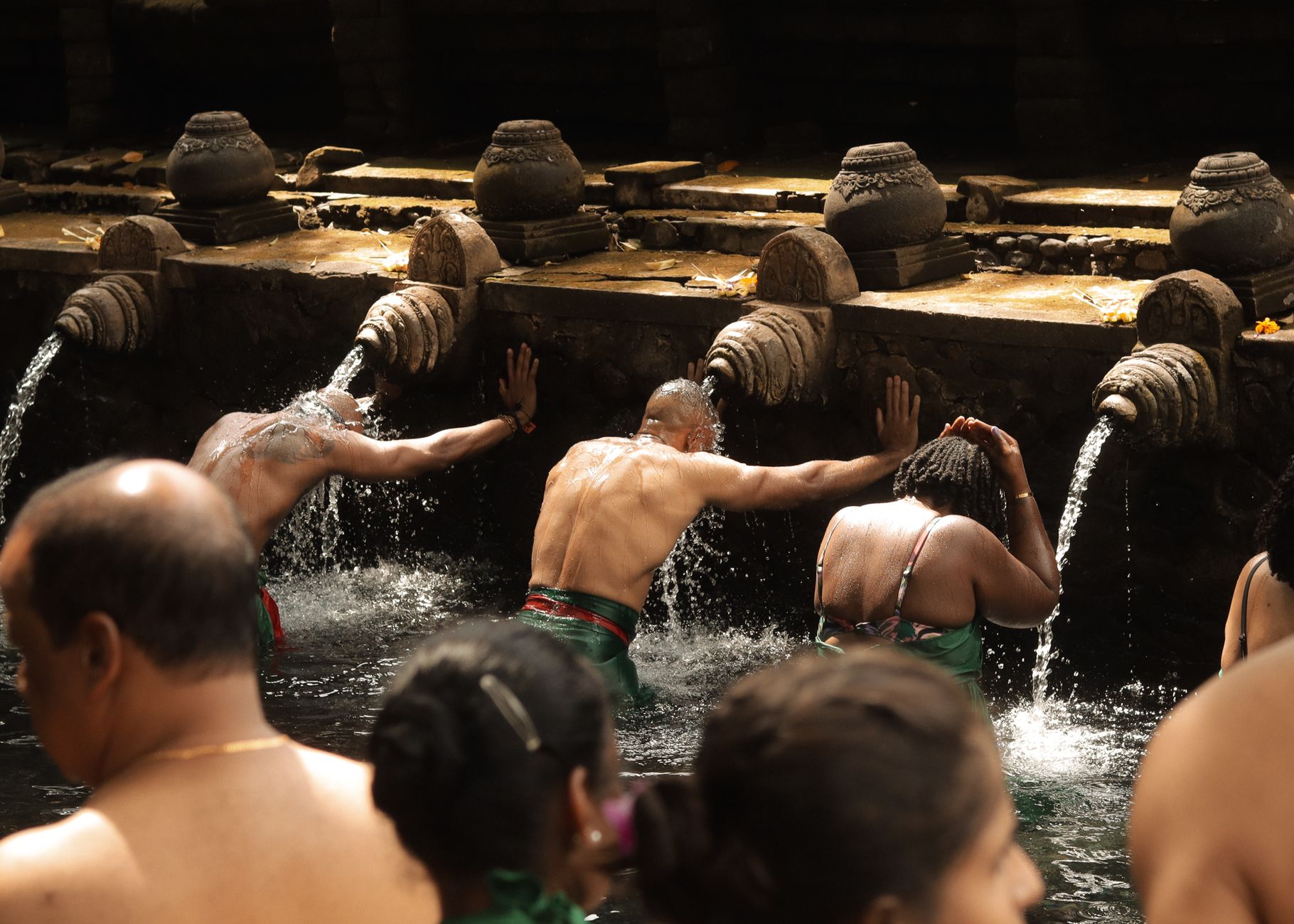
A Medicine System That Never Stopped Living
Walk through a Balinese village at dawn and you'll encounter something most wellness retreats can only simulate: a functioning, integrated healing culture that has survived centuries not through preservation but through continuous practice. Usada — Bali's traditional medicine system — isn't housed in museums or packaged for tourists. It lives in the daily choices of Balinese families, in the relationships between practitioners and their communities, and in a philosophical framework where the physical body, emotional state, and spiritual condition are understood as fundamentally inseparable.
For those living on or visiting the island seriously, this distinction matters enormously. The difference between encountering genuine Usada and its commercialized approximation can be the difference between a forgettable transaction and an experience that genuinely shifts how you understand healing, spirituality, and culture.
Usada exists within Bali's Hindu spiritual worldview, but it is not primarily a spiritual performance. It is a medical system — one that works alongside rather than against modern medicine in how Balinese communities actually live. Understanding it requires setting aside the wellness-product mentality entirely and recognizing it as exactly what it is: a living, functional tradition embedded in a specific culture.
The Practitioners: Different Specializations, Different Approaches
Not all healers in Bali work the same way, and the term Balian encompasses several distinct practices, each with its own methodology and focus.
Balian Usada practitioners work from scholarship — specifically, from the lontar (palm leaf) manuscripts that contain the classical texts of Balinese medical knowledge. These are the most academically grounded healers, diagnosing conditions and prescribing remedies drawn from written tradition. If you imagine a healer consulting ancient medical texts, consulting case histories, and building a treatment protocol, you're imagining a Balian Usada.
Balian Taksu operate from an entirely different foundation. These practitioners work through spiritual trance and channeling, their practice rooted in the belief that certain illnesses and conditions — persistent bad fortune, relational disturbances, a sense of displacement or wrongness without physical cause — stem from spiritual rather than physical sources. The Taksu diagnosis and treatment occur within a different explanatory framework entirely.
Balian Tulang are specialists in what you might call structural medicine. They treat fractures, dislocations, and musculoskeletal injuries through physical manipulation and herbal preparation — bone-setters in the traditional sense, and their work remains highly respected within Balinese communities for conditions that modern orthopedics now treats.
Balian Apun focus specifically on pregnancy, childbirth, and postpartum care — a traditional obstetric system that still functions, often alongside modern medical care, as part of how Balinese women navigate reproduction.
Understanding these distinctions matters because consulting a Balian Taksu for a broken wrist, or a Balian Usada for what is understood as a spiritual disturbance, would be a category error. The practitioner and the patient both understand which type of problem requires which type of healer.
Jamu: The Herbal Medicine That Never Left Daily Life
If Usada is the formal medical tradition, Jamu is the herbal medicine practice that lives in ordinary Balinese life — and has never stopped. You'll encounter jamu in ways both traditional and contemporary: from the vendors who still carry prepared tonics on a yoke through villages, to offerings in traditional warungs served alongside coffee, to the formalized businesses that have modernized production while preserving recipes and techniques.
Jamu preparations draw from an extraordinary plant pharmacology: turmeric, ginger, galangal, lemongrass, black pepper, kaempferia, and dozens of other roots, barks, leaves, and spices in combinations that have been refined over generations. Each combination is prepared for specific purposes — some for vitality and prevention, others for specific conditions, others for beauty or strength.
What makes jamu particularly important for visitors to understand is that it offers genuine access to Balinese plant medicine without requiring navigation of the more complex social and spiritual protocols surrounding a full Balian consultation. Jamu is culturally accessible, widely available, genuinely used by Balinese communities themselves, and represents real traditional knowledge in a form you can actually encounter and try.
The Complication: When Tradition Becomes Product
A single book changed the landscape of Balinese traditional healing for tourists. When Eat Pray Love introduced readers to Ketut Liyer — an Ubud-based Balian — it created a surge of foreign interest that, predictably, spawned distortions.
What followed was the emergence of a parallel economy: practitioners with minimal or fabricated training marketing themselves specifically to international clients, pricing structures divorced entirely from what Balinese community members pay, and visitor expectations shaped by memoir and film rather than cultural reality. Walk into the wrong setup in Ubud, and you're not accessing traditional healing — you're participating in a theatrical wellness experience designed to match your expectations.
This matters not as moral judgment but as practical information. Genuine Balian practitioners do consult with international visitors. But they do so through specific pathways and with specific expectations about comportment and respect. The experience of being introduced through proper channels to a genuine community practitioner bears almost no resemblance to arriving at a tourist operation specifically designed for foreign clients.
How to Engage Respectfully — And Why It Matters
If you're serious about encountering traditional Balinese healing, the pathway begins with understanding that this is not a transaction you can simply book online.
You need introduction. The appropriate way to consult a Balian is through someone with a genuine relationship to the practitioner — a Balinese friend, a trusted cultural guide, or a long-term resident who understands both the practitioner and the visitor. This introduction is not a courtesy. It is the mechanism by which a healer understands who you are and what your intentions are.
Dress is not optional. Arriving at a Balian consultation requires appropriate dress — a sarong and sash. This is not Western politeness or cultural appreciation. It is the required conduct for entering a spiritual space. Your guide can help you understand what this means in context.
Bring an offering. Arriving without a traditional offering — which your contact can help you prepare — is equivalent to arriving at a formal appointment without greeting the person you're meeting. The offering itself is not elaborate; it is the gesture of respect it embodies.
Expect to navigate language. Most Balian consultations happen in Balinese or Indonesian. You will need a trusted translator who understands both the medical/spiritual concepts and your cultural context.
Understand payment. A Balian consultation is not a set-price commercial service with a displayed menu and standard rates. Payment is a voluntary offering at the conclusion, determined by what you can offer in recognition of the service. This is fundamentally different from the pricing structure of wellness tourism.
The Integration: How Balinese Communities Actually Use These Systems
One critical observation: Balinese people generally do not understand Usada and modern medicine as competing systems requiring choice between them. A Balinese family might consult a Balian for a condition understood to have spiritual components while simultaneously seeking modern medical treatment for acute physical illness. The frameworks coexist because they address different dimensions of health.
This integration is worth noting because it undermines the binary thinking common in Western wellness discourse — the sense that one must choose between traditional and modern, that they are fundamentally opposed. Balinese culture suggests a more nuanced relationship: different systems for different problems, both valuable, both real.
What This Access Actually Means
For residents and serious visitors, genuine access to Balinese traditional healing represents something genuinely rare: the opportunity to learn from a functioning, non-commodified medical and spiritual tradition. It is not a wellness experience. It is not self-care. It is an encounter with a different framework for understanding health, illness, body, and spirit — one that has sustained itself through centuries not because it is exotic but because it works within the context it was designed for.
The experience can be genuinely meaningful. Long-term residents report consultations that shifted their understanding of their own health, relationships, or spiritual condition. But this value emerges specifically from the authenticity of the encounter — from consulting someone with genuine knowledge, with genuine respect for the tradition you're entering, and with clear understanding that you are a guest in a healing system that was never designed for you.
That distinction — between access and appropriation, between respect and consumption — is what separates a genuinely transformative encounter from a forgettable wellness transaction.
FAQ
Can modern medicine and traditional Balinese healing work together?
Yes — Balinese communities typically do use both. Conditions understood to have spiritual components might be addressed through a Balian, while acute physical illness might be treated through modern medicine. They are not seen as competing systems but as addressing different dimensions of health.
Is a Balian consultation valuable if you're not Balinese or Hindu?
Many long-term residents report genuinely useful consultations conducted through proper introduction and with cultural respect. The spiritual framework is Balinese Hindu, but practitioners typically work with visitors from outside the tradition when the introduction and conduct are appropriate.
How do you actually find a legitimate Balian if you don't have local connections?
Connect with established cultural guides or long-term residents who can provide introduction. Booking platforms marketed to tourists are not the pathway to genuine practitioners. The introduction itself is the mechanism that establishes legitimacy.
What should you expect during a consultation?
Expect time — genuine consultations are not rushed. Expect that much will happen through intuition and observation rather than conversation. Expect that the practitioner may ask about aspects of your life and relationships that seem far removed from your stated concern. Expect that understanding may come gradually rather than in a single session.
Is it offensive to approach a Balian as a visitor?
Not if the approach is correct. Balinese practitioners understand that people from outside the tradition seek knowledge. What matters is that you arrive through proper introduction, with appropriate respect, and with genuine interest rather than curiosity as spectacle.