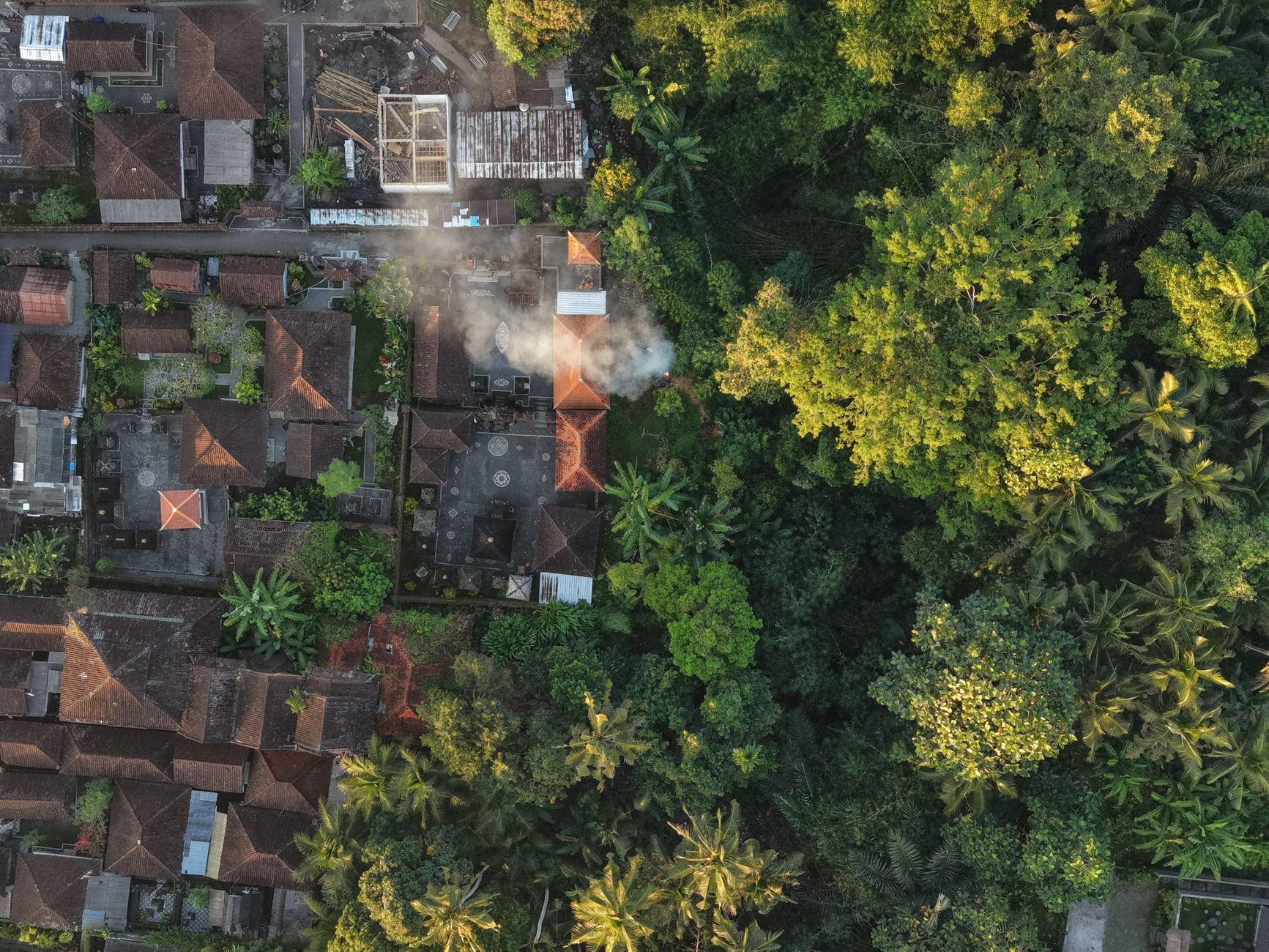
Beyond the Postcard: Why Bali Real Estate Makes Serious Investment Sense
There's a particular type of marketing that surrounds Bali property. The narrative goes like this: acquire your architectural dream, rent it out when absent, return whenever desire strikes. The story is seductive. It's also incomplete.
What gets lost in the lifestyle framing—the infinity pools, the rice terrace views, the promise of tropical escape—are the mechanics that actually make Bali a defensible addition to a diversified property portfolio. Those mechanics exist whether or not you ever occupy the villa. They exist independent of Instagram-worthy sunsets.
The investment thesis for Bali is straightforward. It rests on five pillars: supply constraints anchored in physical geography, structural demand rooted in tourism and migration patterns, rental yields that materially exceed developed markets, land appreciation that has consistently outpaced inflation, and entry pricing that remains competitive relative to comparable premium markets across Southeast Asia.
Each of these can be examined on its own merits, separated from the lifestyle narrative entirely.
The Geography of Scarcity
Bali is 5,780 square kilometers. That's fixed. It cannot expand.
Within that footprint, developable land is something else entirely. It's constrained by multiple overlapping regulations:
- Agricultural protection laws that shield rice paddies (sawah) from conversion
- Environmental setback requirements that push development away from sensitive zones
- Temple buffer zones that honor cultural geography
- Height restrictions capping most construction at 15 meters
- Coastal regulations that limit building near the shoreline
The intersection of these constraints and favorable location and development rights produces something genuinely rare: finite parcels in a desirable location that can legally be developed.
As the global pool of capital pursuing Bali property expands—driven not just by Western buyers but increasingly by wealthy Asian middle classes seeking international real estate exposure—that scarcity becomes progressively more relevant. Supply cannot chase demand. The gap between them tightens.
Demand: Durable, Not Speculative
Bali is not a frontier. It's not an undiscovered market waiting to be "discovered."
In 2023, the island welcomed approximately 5.3 million international visitors as it recovered from pandemic disruption. Pre-pandemic arrivals exceeded 6.2 million annually. The medium-term trajectory—sustained by growing tourism volumes from Asia and Bali's cemented position in the global travel consciousness—points toward steady demand expansion.
This is the opposite of speculative. Bali is a proven, established destination with demonstrated draw across multiple source markets and consumer segments. The investment argument isn't about hoping the world discovers Bali. It's about investing in a market where discovery already happened.
But there's a secondary demand story worth examining separately: the rise of long-stay populations. Digital nomads, remote workers, semi-retirees, and property investors increasingly occupy Bali for extended periods—often months at a time. This segment barely existed a decade ago. Today, it materially reshapes demand.
Long-stay residents occupy properties differently than tourists do. They stay longer. They spend differently. They command different rental dynamics. For property owners, this segment often generates higher-margin returns than pure tourism alone.
The Yield Question: Where Bali Separates From Mature Markets
This is where the numbers become difficult to ignore.
Net yields (after deducting management costs but before personal taxation) for well-positioned premium properties in Bali's core corridors:
- Canggu and Berawa premium villas (2–3 bedrooms): 10–15% net annually
- Seminyak boutique properties (strong market positioning): 12–18% net annually
- Uluwatu cliff-top villas (supply-constrained positioning): 12–20% net annually
- Ubud area wellness properties: 8–14% net annually
These are not pro forma projections or optimistic forecasts. They reflect documented operating data from real transactions and established management operations.
For comparison: mature real estate markets (the UK, parts of North America, established European cities) consider gross yields of 4–6% strong. Bali's documented net figures are simply in a different category.
The critical caveat deserves emphasis: yield performance is entirely dependent on management quality and property positioning. An underperforming property in any location will underperform. A well-operated property in the right location generates the figures above. The operative variables are execution and location selection, not market magic.
Land Appreciation: The Historical Record
Over the eight-year period from 2015 to 2023, land prices in Bali's premium corridors moved substantially:
- Canggu core: Prices appreciated 15–25% annually during this period. Entry prices in key sub-locations increased 3–5x over the eight years.
- Seminyak: Slower appreciation but consistent. A more mature market with lower volatility and strong capital preservation properties.
- Uluwatu Bukit: Significant appreciation as the area's tourism profile and luxury positioning developed, starting from a lower base.
Here's where intellectual honesty matters: past appreciation does not guarantee future returns. The Canggu corridor's exceptional historical performance reflects a dramatic market re-rating of what was previously undervalued property. Perpetuating that growth rate from current price levels is less certain.
The realistic expectation is moderate appreciation combined with strong yield as the actual return driver. Land may continue to appreciate modestly as the island develops further, but you're primarily investing in the income generation, with capital appreciation as a secondary benefit.
The Legal Framework: Choosing Your Structure
Foreign investment in Bali real estate requires understanding the legal mechanics. You have options:
Leasehold (Hak Sewa): The most common foreign investor structure. Typical terms are 25–30 years with renewal provisions. Lower entry cost than freehold equivalents. At lease end, property rights revert to the landowner. This is the straightforward, legally compliant approach.
PT PMA (Foreign-Invested Company): A company structure holding property rights. Requires more administrative overhead but provides Hak Guna Bangunan (right to build) registration. Appropriate for larger or commercial-scale investment.
Hak Pakai (Right to Use): Available to foreign nationals holding KITAS or KITAP residency status. A registered use right held directly in the individual's name. Intermediate between leasehold and direct ownership.
What deserves avoidance entirely: informal "nominee" arrangements where an Indonesian national holds title on your behalf. The legal risk is real. The downside scenario is catastrophic—total loss of invested capital with no legal recourse.
The Bigger Picture
The property market in Bali has matured substantially over the past decade. It's no longer a Wild West of speculative investment and get-rich-quick narratives. The market now includes serious operators, professional management companies, and institutional-quality assets.
For investors approaching Bali property on the merits of yield, land scarcity, and durable demand—rather than lifestyle fantasy—the fundamentals support inclusion in a diversified portfolio. The yields justify the entry price. The supply constraints are real. The demand is structural rather than cyclical.
The villa with the sunset view is nice. But it's not why you should invest.
Frequently Asked Questions
How does Bali's investment performance compare to other Southeast Asian property markets?
Bali's net rental yields (10–20% range in premium locations) are comparable to or exceed Phuket, significantly higher than Singapore, and substantially ahead of most mature global markets. The supply constraint story is also more defensible—Bali cannot manufacture new developable land, whereas mainland Southeast Asian markets can acquire agricultural land and convert it at scale. That said, Bali also has higher entry prices than emerging markets within Southeast Asia, so comparison depends on your risk/return profile.
Is this a good time to enter the market?
Post-pandemic recovery is complete, and premium property prices exceed 2019 levels. Entry valuations in top-tier locations are elevated compared to historical lows but remain more attractive than comparable premium island markets globally. Timing decisions should be driven by your personal financial position and investment horizon, not market sentiment.
What are the realistic ongoing costs beyond purchase?
Budget 20–30% of gross rental revenue for professional property management, 2–5% of property value annually for maintenance and repairs, annual land tax (PBB, typically nominal), and administrative costs for your legal holding structure. These costs should be factored into yield calculations—they're material and often underestimated by new investors.
Can I expect the same appreciation rates that occurred 2015–2023?
Unlikely. The 2015–2023 period captured significant re-rating of an undervalued market. More realistic forward expectations: modest land appreciation (3–7% annually) with rental yield as your primary return driver. Don't construct investment returns around repeating historical capital gains—that's how capital gets destroyed.
What's the exit strategy if I need to liquidate?
Bali's property market is liquid for well-positioned premium properties in established corridors (Canggu, Seminyak, Uluwatu). Exit timelines are typically 3–6 months for quality assets. Secondary locations take longer. Your exit strategy should assume you might need 6–9 months to sell a property at reasonable value; faster exit typically means discounting price.